
Why Are Department Stores Rethinking “Retail Space”? | Dasin News and Events | Made in Taiwan Commercial Juicers & Shaking Machines for Beverages and Drinks Manufacturer | Dasin Machinery Co., Ltd.
Dasin Why Are Department Stores Rethinking “Retail Space”?. Dasin - Specializes in assisting beverage shops, bubble tea shops, juice shops, restaurants, etc., providing beverage and juice making machine.. Dasin Machinery is located in Caotun, Nantou, Taiwan, which is a professional manufacturer of food machinery. Our company was called Shengfa Food Machinery in early times, which started to produce commercial juicers and do OEM since 1975. We continually accumulate our experience in OEM and ODM. Meanwhile we constantly develop new products to fulfill the needs of our customers.
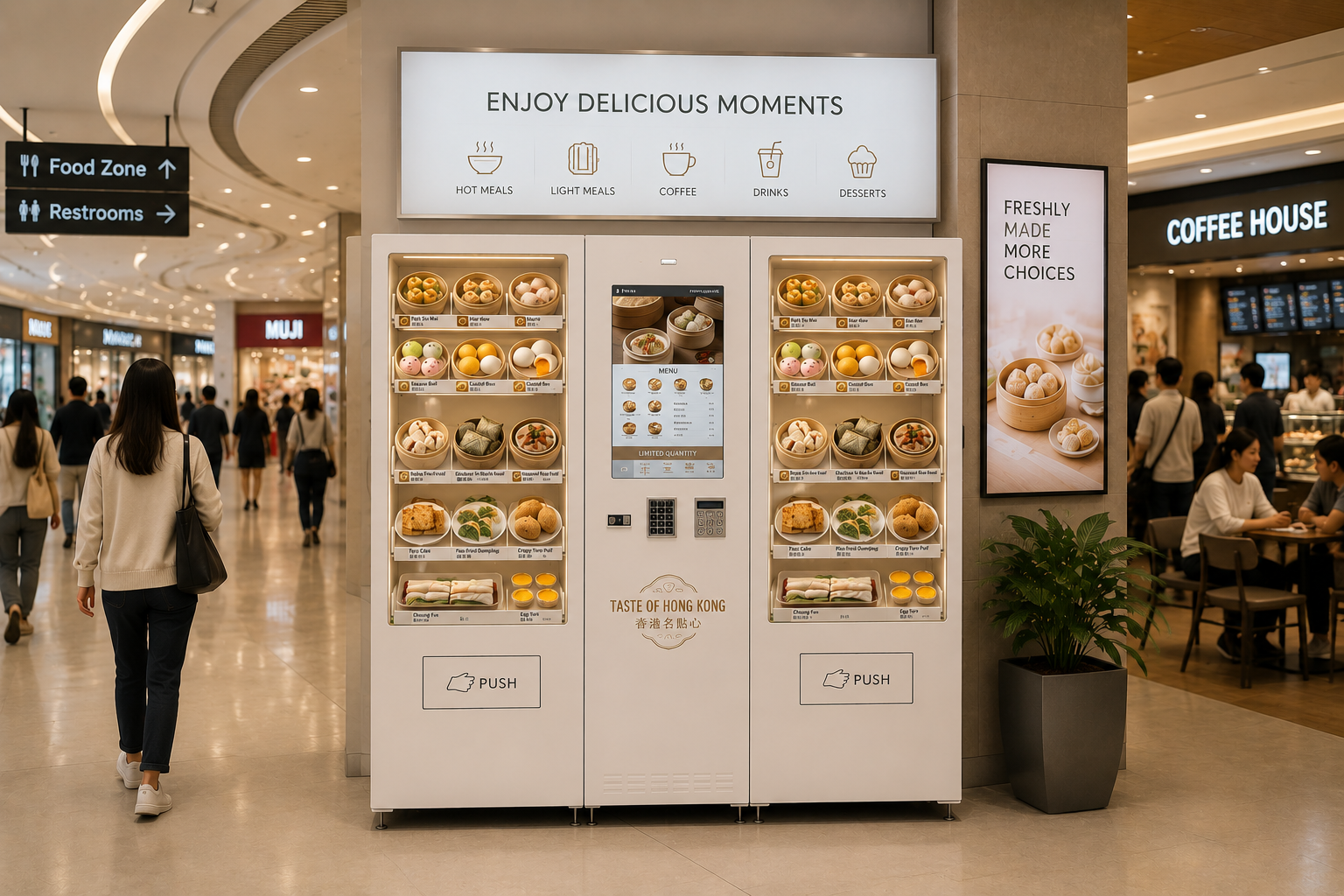
Why Are Department Stores Rethinking “Retail Space”?
Department Store Vending Machines, Smart Vending Solutions, Smart Retail Equipment, Self-Service Retail Systems, KIOSK Solutions, Unmanned Store Equipment, Pop-Up Retail Concepts, Smart Retail Integration
In the past, the most valuable spaces inside department stores were usually reserved for luxury counters and flagship brands.
Because in the traditional retail era:
Large spaces / Big brands / Premium interior design / Prime retail locations
were almost equal to the value of the shopping mall itself.
But today, some department stores are beginning to dedicate these spaces to something very different:
“Retail equipment without staff.”
It may seem like a small change,
but it is gradually reshaping the entire retail industry.
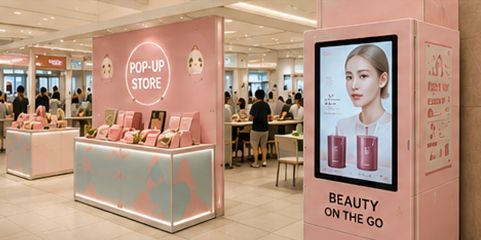
What’s Really Changing Isn’t the Equipment
It’s consumer behavior.
Over the past few years, one major trend has become increasingly obvious:
Many younger consumers no longer care whether a store has staff or not.
What they care about is:
✔ Can purchases be completed quickly?
✔ Is payment convenient?
✔ Can they avoid waiting in line?
✔ Can products be picked up immediately?
Especially as mobile payments and self-service shopping continue to grow, consumers have become far more comfortable with unmanned retail experiences.
As a result:
✔ Self-ordering systems
✔ Mobile payments
✔ QR-code shopping
✔ Cashless checkout
have gradually become part of everyday shopping behavior.
For modern consumers:
➤ “Convenience”
often matters more than traditional service.
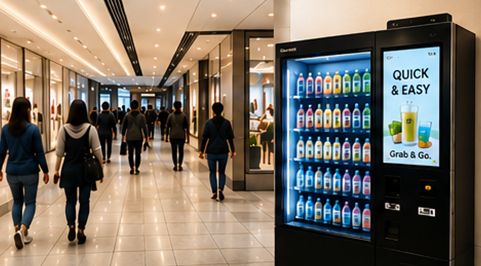
Department Stores Are Beginning to Focus on “Transition Spaces”
More shopping malls are beginning to realize:
High-traffic areas are not always suitable for full-sized retail stores.
Especially locations such as:
☛ Elevator waiting areas
☛ Underground walkways
☛ Connecting corridors
☛ Cinema entrances
☛ Food court surroundings
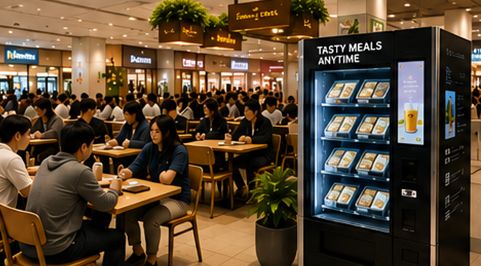
In these areas, consumers usually only stay for 30 seconds to 2 minutes.
They are difficult to turn into traditional retail counters.
However, they all share one important characteristic:
Very high foot traffic.
That is why many department stores are now rethinking:
“Can these spaces that cannot become traditional stores turn into new retail opportunities?”
This is also one of the main reasons why:
➤ Small-format retail
➤ Micro retail stores
➤ Pop-up retail spaces
➤ Unmanned retail equipment
have rapidly increased in recent years.
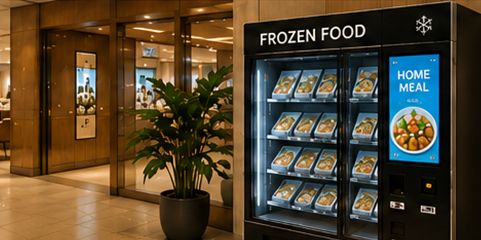
Sometimes the Most Valuable Spaces
Are Not Large Enough for Traditional Stores
For department stores, the real challenge is not only attracting brands.
It is:
“How to increase the value of spaces that cannot become full retail counters.”
Because many areas have:
➤ Limited space
➤ Fast-moving customer flow
➤ Short consumer dwell time
making them unsuitable for traditional retail stores.
But today, smart retail equipment is creating a new possibility.
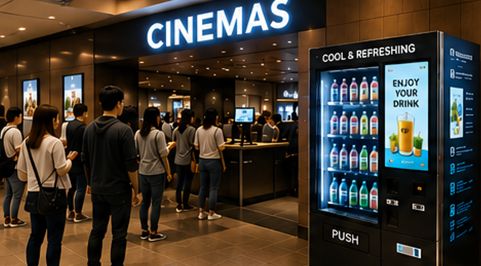
For example, many shopping malls have started placing smart vending machines in:
☛ Cinema entrances
☛ Exhibition event areas
☛ Underground retail corridors
☛ Food court surroundings
transforming high-traffic but underutilized areas into new consumer touchpoints.
Some brands even use:
☛ Smart vending machines
☛ Pop-up vending equipment
☛ Self-service retail spaces
to test market response before officially opening a physical store inside the mall.
This model is gradually changing the traditional retail expansion strategy.
Which Products Are Most Suitable for Smart Retail in Department Stores?
Not every product is suitable for a large retail store.
More brands are beginning to realize:
Some products are better suited for:
“Fast purchasing”
rather than long in-store browsing experiences.
Beverages & Ready-to-Drink Products
For example:
● Bubble tea
● Specialty coffee
● Cold brew tea
● Fresh juice
These products naturally feature:
✔ Grab-and-go convenience
✔ Fast consumption
✔ High customer turnover
making them ideal for locations such as:
➤ Food court surroundings
➤ Cinema entrances
➤ Underground walkways
where customer traffic is extremely high.
For department stores, the biggest advantage of these products is:
“The ability to complete purchases quickly.”
Frozen Foods & Ready-to-Eat Meals
In recent years, many consumers have become accustomed to:
● Buying meals after work
● Quickly reheating food at home
● Taking food away instantly
As a result:
✔ Frozen foods
✔ Microwave meals
✔ Ready-to-eat lunch boxes
have increasingly been integrated into smart retail systems.
This trend is especially noticeable in:
➤ Office-building malls
➤ Community shopping centers
➤ Transportation hubs
Because what consumers want today is not necessarily “shopping.”
Instead, they want:
“More efficient purchasing experiences.”
Pop-Up Brand Products
For many brands, the biggest challenge of pop-up retail is:
“The cost is too high.”
That is why more brands are now using:
● Smart vending machines
● Self-service retail equipment
● Micro smart retail counters
to test market demand first.
Especially products such as:
✔ Souvenirs
✔ Creative merchandise
✔ Beauty products
✔ Co-branded products
which are highly suitable for smart retail formats.
Compared to traditional retail counters, these systems allow brands to:
➤ Enter the market faster
➤ Adjust more flexibly
➤ Test the market with lower costs
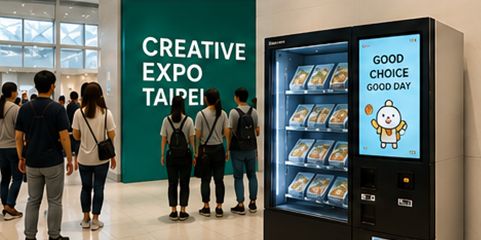
Smart Vending Machines Are Becoming “Micro Smart Stores”
In the past, many people associated vending machines with:
☛ Coin-operated systems
☛ Bottled drinks
☛ Traditional vending equipment
But modern smart retail equipment is completely different.
From mobile payment integration and interactive touchscreens to cloud-based data management, the entire retail logic is evolving.
These systems are no longer just machines that sell products.
Instead, they are becoming:
“A small smart retail store without staff.”
That is why more and more:
➤ Pop-up retail concepts
➤ Unmanned retail spaces
➤ Self-service retail equipment
➤ Interactive KIOSK systems
are entering shopping malls.
For Brands, What’s Changing Is the Expansion Strategy
In an era of labor shortages and rising rental costs,
many brands are facing a new challenge.
The issue is no longer simply the product itself.
It is:
“How to reach consumers with lower operational costs.”
Traditionally, entering a department store required:
☛ High rental costs
☛ Expensive interior decoration
☛ Staffing requirements
☛ Long-term operational pressure
But now, more brands are realizing:
Some products do not necessarily require a full retail store.
Instead, they are better suited for:
✔ Micro retail locations
✔ Pop-up retail spaces
✔ Self-service retail models
✔ Smart retail equipment
Especially for:
➤ Beverage brands
➤ Frozen food brands
➤ Dessert brands
➤ Lifestyle merchandise brands
smart vending machines are becoming:
“A lower-risk way to test the market.”
Smart Retail May Not Be Changing
How Products Are Sold
It may actually be changing:
“How brands connect with consumers.”
In the past, brands competed through:
☛ Store size
☛ Interior scale
☛ Prime retail locations
But future competition may no longer be about:
“Who has the biggest store.”
Instead, it may become:
“Who can naturally appear closer to consumers’ daily lives.”
The future retail market may not require more large-scale stores.
Instead, it will require:
✔ More flexible retail models
✔ Faster shopping experiences
✔ Lower labor operations
✔ Retail spaces that better match consumer habits
And smart retail equipment is gradually becoming:
A core part of next-generation shopping malls.
We Believe the Future of Retail
Is Not About Opening More Stores
It is about:
“Creating more smart retail touchpoints that connect brands with consumers.”
From smart retail equipment and KIOSK systems to unmanned retail integration,
future shopping malls may no longer function only as “brand display spaces.”
Instead, they may gradually evolve into:
“More immediate and flexible consumer interaction platforms.”
FAQ
Q: Are smart vending machines suitable for department stores?
A: Absolutely. They are especially suitable for high-traffic, small-space, and pop-up retail environments.
Q: What products are suitable for department store smart vending machines?
A: Beverages, desserts, frozen foods, souvenirs, beauty products, and creative merchandise are all highly suitable.
Q: Do smart vending machines require on-site staff?
A: With cloud-based management systems, on-site labor requirements can be greatly reduced. Only periodic restocking and maintenance are needed.
Popular Products
 Download
 Why Are Department Stores Rethinking “Retail Space”? | Made in Taiwan Commercial Juicers & Shaking Machines for Beverages and Drinks Manufacturer | Dasin Machinery Co., Ltd.
Located in Taiwan since 2010, Dasin Machinery Co., Ltd. has been a food machinery manufacturer. Their main products, including Commercial Juicers, Shaking Machines for Beverages and Drinks, Powder Dispensers, Industrial Juicers and Commercial Tapioca Pearls Machines with ISO 9001 certification.
Dasin Machinery is located in Caotun, Nantou, Taiwan, which is a professional manufacturer of food machinery. Our company was called Shengfa Food Machinery in early times, which started to produce commercial juicers and do OEM since 1975. We continually accumulate our experience in OEM and ODM. Meanwhile we constantly develop new products to fulfill the needs of our customers. Over 40 years of designing and manufacturing experience for commercial juicers, 70% to 80% market share in juice factory and beverage store business of Taiwan.
Dasin has been offering customers high-quality beverage and drink commercial machines, both with advanced technology and 40 years of experience, Dasin ensures each client's demands are met.