
What Should You Check Before Purchasing Beverage Shop Equipment and Planning Electrical & Plumbing Work? | Dasin News and Events | Made in Taiwan Commercial Juicers & Shaking Machines for Beverages and Drinks Manufacturer | Dasin Machinery Co., Ltd.
Dasin What Should You Check Before Purchasing Beverage Shop Equipment and Planning Electrical & Plumbing Work?. Dasin - Specializes in assisting beverage shops, bubble tea shops, juice shops, restaurants, etc., providing beverage and juice making machine.. Dasin Machinery is located in Caotun, Nantou, Taiwan, which is a professional manufacturer of food machinery. Our company was called Shengfa Food Machinery in early times, which started to produce commercial juicers and do OEM since 1975. We continually accumulate our experience in OEM and ODM. Meanwhile we constantly develop new products to fulfill the needs of our customers.
What Should You Check Before Purchasing Beverage Shop Equipment and Planning Electrical & Plumbing Work?
Before purchasing equipment, several important factors should be reviewed. These include equipment dimensions, available counter space, electrical capacity, water supply and drainage locations, and whether the equipment can be operated comfortably after installation.
When preparing to open a beverage shop, is it enough to find the equipment you like, confirm the prices, and place your order?
Not quite.
Before purchasing equipment, several important factors should be reviewed. These include equipment dimensions, available counter space, electrical capacity, water supply and drainage locations, and whether the equipment can be operated comfortably after installation.
If these details are overlooked until the equipment arrives, you may discover that there is insufficient space, electrical outlets are incorrectly positioned, or the required plumbing connections are unavailable. Such issues can lead to layout adjustments, additional construction costs, and unnecessary delays.
A more efficient approach is to confirm equipment specifications and on-site conditions before finalizing equipment purchases and electrical and plumbing arrangements. This helps ensure that the equipment, installation, and actual workflow are properly coordinated.
The length, width, and height listed in an equipment specification sheet are only the starting point.
When planning your beverage shop, you should also consider whether there is sufficient space for daily operation, ingredient replenishment, cleaning, and maintenance after the equipment is installed.
We recommend checking:
- Equipment length, width, and height
- Available operating space around the equipment
- Clearance above the equipment for opening lids or adding ingredients
- Potential obstructions from walls, cabinets, or other machines
- Accessibility for cleaning, servicing, and maintenance
If equipment requires opening covers, removing components, or performing regular cleaning, measuring only the machine itself is not enough. The required operating and maintenance space should also be included.
Different machines may have different voltage, power, and electrical requirements. Before purchasing, obtain the equipment specifications from the supplier and have a qualified electrician evaluate the site's electrical capacity.
Important items to check include:
- Rated operating voltage
- Power consumption and electrical requirements
- Number and locations of electrical outlets
- Electrical capacity when multiple machines operate simultaneously
- Whether dedicated circuits or other electrical arrangements are required
Simply checking whether a machine's plug fits an existing outlet does not guarantee that the electrical supply is suitable.
If your beverage counter includes tea brewing machines, refrigeration equipment, cup sealing machines, and other electrical appliances, provide the specifications of all equipment to a qualified professional for an overall electrical assessment.
Do not assume that all machines can safely share existing power circuits.
Some beverage shop equipment requires a water supply, drainage connection, or specific cleaning arrangements. These requirements should be confirmed before purchasing.
Ask the equipment supplier about:
- Whether a direct water supply connection is required
- Whether drainage piping is necessary
- Water inlet and drainage connection locations and specifications
- Available space between the equipment and plumbing connections
- Whether daily cleaning and drainage can be performed conveniently
For example, if a machine requires a continuous water supply but there is no suitable water connection near the counter, additional plumbing work may be necessary.
Water filtration systems should also be evaluated based on the incoming water quality, equipment requirements, and installation method. These arrangements should not be postponed until the machines arrive.
A beverage counter is more than just a platform for placing machines. Its design directly affects how employees work.
Equipment height, control panel positions, dispensing locations, and countertop height should all be considered together.
During planning, check whether:
- Employees can easily access ingredients and supplies
- Equipment occupies too much of the main working area
- Dispensing positions allow smooth transitions to the next preparation step
- Ingredient replenishment and cleaning require moving other equipment
- There is enough countertop space for cups, ingredients, and utensils
If the dispensing position is too far from the next preparation station, employees may need to move around frequently, reducing efficiency during peak hours.
We recommend preparing a basic counter layout before deciding on equipment placement.
Being able to fit a machine inside your shop does not necessarily mean it can be transported to its intended installation location.
For larger or heavier equipment, check whether the entrance, corridors, corners, stairways, and other access routes can accommodate the machine.
Before purchasing, confirm:
- Equipment and packaging dimensions
- Shop entrance and transportation routes
- Narrow corridors, stairways, and tight corners
- Accessibility of the installation location
- Whether special transportation arrangements are necessary
For newly renovated shops, coordinate the equipment delivery schedule with the renovation contractor to avoid conflicts between equipment installation, cabinetry, and construction work.
Different machines have different specifications and installation requirements. The same checklist should not be applied to every type of equipment.
Before purchasing, check the machine dimensions, voltage, power consumption, water supply method, operating space, and cleaning requirements.
If the machine requires a direct water supply or drainage connection, confirm the connection specifications and site conditions with the supplier in advance.
You should also consider the machine's brewing capacity and your actual tea production requirements. A machine that physically fits your counter may not necessarily meet your operational or production needs.
In addition to equipment dimensions and electrical requirements, check the installation location, ingredient replenishment method, operating clearance, and daily cleaning requirements.
If the machine involves refrigeration lines, ingredient delivery systems, or specific installation conditions, confirm the requirements for the actual model with the supplier. Do not assume that every model has identical installation configurations.
For water filtration equipment, check the water source, system specifications, installation space, filter replacement method, and future maintenance requirements.
If the filtration system is installed underneath the beverage counter, make sure the cabinet provides sufficient clearance for installation, filter replacement, and maintenance.
For cup sealing machines, confirm the machine dimensions, compatible cup sizes, sealing film specifications, electrical requirements, and available countertop space.
You should also consider how sealed drinks will move to the pickup area. A sealing machine may fit perfectly on the counter but still disrupt the overall workflow if its position is poorly planned.
Some shop owners complete their counter construction and electrical and plumbing work before deciding which machines to purchase.
However, if equipment specifications and installation requirements have not been confirmed, additional modifications may be necessary later.
After selecting the equipment, you may discover that the outlets are too far away or that the existing electrical supply does not meet the machine's requirements. This may require additional electrical work or adjustments to the outlet configuration.
If equipment requires water or drainage connections but no suitable plumbing has been prepared, additional construction work may be necessary.
Even if the machine fits within the available counter dimensions, insufficient clearance for opening, ingredient replenishment, cleaning, or maintenance can create operational problems.
Without proper workflow planning, adding machines may create unnecessary movement between ingredient preparation, beverage production, cup sealing, and order pickup.
For these reasons, we recommend confirming the equipment list and specifications first, then sharing the relevant information with renovation contractors, electricians, plumbers, and equipment installation personnel.
All electrical, water supply, drainage, and construction arrangements should be evaluated by qualified professionals according to the actual equipment specifications and site conditions.
If you are still preparing your beverage shop, the following process can help organize your project.
List the beverages you plan to offer when the shop opens. Identify the preparation methods, ingredient requirements, and storage conditions for each product.
Based on your workflow, including tea brewing, ingredient storage, beverage mixing, cup sealing, and order pickup, list the equipment you plan to purchase.
Request detailed specifications from each equipment supplier.
Confirm counter dimensions, equipment locations, operating clearance, transportation routes, and necessary electrical, water supply, and drainage conditions.
Provide equipment specifications and the proposed layout to the relevant contractors.
Have them evaluate electrical outlets, plumbing connections, countertops, and other necessary construction work.
Before placing your order, confirm equipment prices, delivery, installation, machine setup, and any related services.
Coordinate the equipment delivery schedule with the renovation and construction timeline.
After the equipment arrives, check that each machine operates correctly and that there is sufficient space for normal operation.
Verify that the electrical supply, water connections, and drainage arrangements meet the equipment requirements.
Complete the necessary operational tests and familiarize staff with the equipment before opening.
Before placing your equipment orders, use the following checklist to review each item.
- □ Confirmed the initial beverage menu and essential equipment requirements
- □ Obtained equipment dimensions and complete specifications
- □ Confirmed equipment placement and operating clearance
- □ Verified voltage, power consumption, and electrical requirements
- □ Confirmed water supply, drainage, and filtration requirements
- □ Checked counter height and overall workflow
- □ Confirmed transportation routes and delivery access
- □ Verified delivery, installation, and machine setup arrangements
- □ Reviewed the equipment layout with construction contractors
- □ Scheduled equipment delivery, installation, and testing
If any item remains unconfirmed, consult the equipment supplier or relevant construction professionals before placing your order.
Purchasing beverage shop equipment is not simply about comparing prices and machine features.
You also need to make sure that the equipment can be properly installed, meets the conditions of your shop, and supports your daily beverage preparation workflow.
By completing site measurements, equipment specification reviews, and electrical and plumbing assessments before purchasing, you can reduce the risks of additional construction costs, installation difficulties, and inefficient operations.
When planning beverage shop equipment, we recommend starting with your menu, estimated daily beverage volume, site dimensions, and equipment requirements. These details help determine an equipment configuration that matches your actual operating conditions.
DASIN focuses on commercial beverage equipment and practical business applications, helping beverage shop owners evaluate equipment combinations and layout planning.
Our goal is to help you develop an equipment configuration that better fits your shop space, preparation process, and operational needs.
A: We recommend confirming the equipment you plan to purchase and obtaining its specifications before discussing construction requirements with renovation contractors, electricians, and plumbers.
The actual purchasing and construction sequence should be coordinated with the shop's project schedule. However, you should never assume that the existing electrical and plumbing arrangements will automatically meet your equipment requirements.
A: Not necessarily. In addition to the machine's dimensions, you must consider operating clearance, lid opening, ingredient replenishment, cleaning, maintenance, transportation access, and the required electrical, water supply, and drainage connections.
A: No. Different machines have different water usage and installation requirements. Always check the specifications of each individual model rather than assuming that all equipment requires the same plumbing configuration.
A: We recommend requesting the following information:
- Equipment dimensions and complete specifications
- Operating voltage and power consumption
- Water supply and drainage requirements
- Installation conditions
- Required operating and cleaning clearance
- Delivery and installation arrangements
- Machine setup and after-sales service
If your shop has special site conditions, discuss them with the supplier before placing your order.
- Related Products
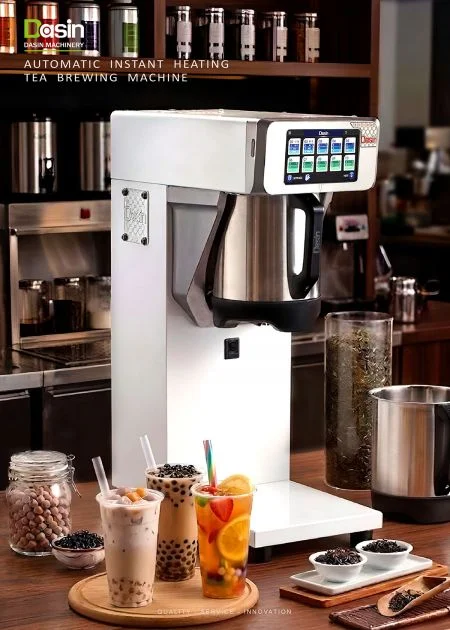
ST300 Automatic Instant Heating Tea Brewing Machine Wi-Fi
ST300 Wi-Fi
It is designed to make brewing tea efficient with a smart tablet interface that's easy to use. The design includes a vortex-style mixing system, which...
Details Add to List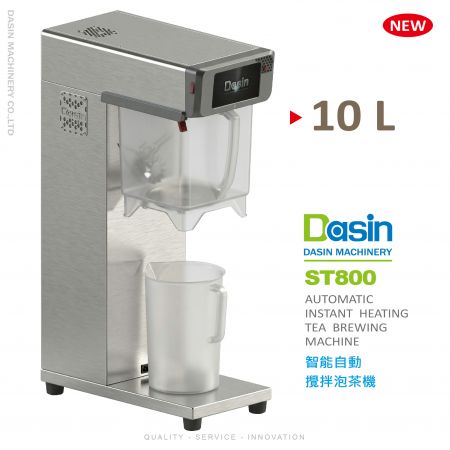
ST800 Automatic Instant Heating Tea Brewing Machine
ST800
It is designed to make brewing tea efficient with a smart tablet interface that's easy to use. The design includes a vortex-style mixing system, which...
Details Add to List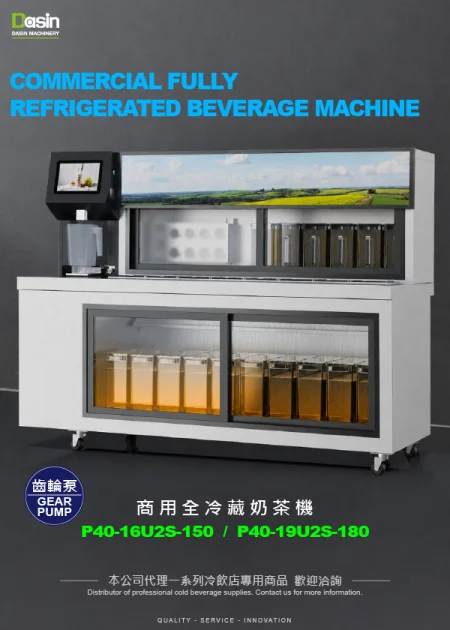
Commercial Fully Refrigerated Beverage Machine
P40-16U2S-150 / P40-19U2S-180
Effortless Operations: Our One-Touch Dispensing system is so intuitive that new staff can master it in seconds. With customizable presets and a precision...
Details Add to List

Popular Products
 Download
What Should You Check Before Purchasing Beverage Shop Equipment and Planning Electrical & Plumbing Work? | Made in Taiwan Commercial Juicers & Shaking Machines for Beverages and Drinks Manufacturer | Dasin Machinery Co., Ltd.
Located in Taiwan since 2010, Dasin Machinery Co., Ltd. has been a food machinery manufacturer. Their main products, including Commercial Juicers, Shaking Machines for Beverages and Drinks, Powder Dispensers, Industrial Juicers and Commercial Tapioca Pearls Machines with ISO 9001 certification.
Dasin Machinery is located in Caotun, Nantou, Taiwan, which is a professional manufacturer of food machinery. Our company was called Shengfa Food Machinery in early times, which started to produce commercial juicers and do OEM since 1975. We continually accumulate our experience in OEM and ODM. Meanwhile we constantly develop new products to fulfill the needs of our customers. Over 40 years of designing and manufacturing experience for commercial juicers, 70% to 80% market share in juice factory and beverage store business of Taiwan.
Dasin has been offering customers high-quality beverage and drink commercial machines, both with advanced technology and 40 years of experience, Dasin ensures each client's demands are met.