
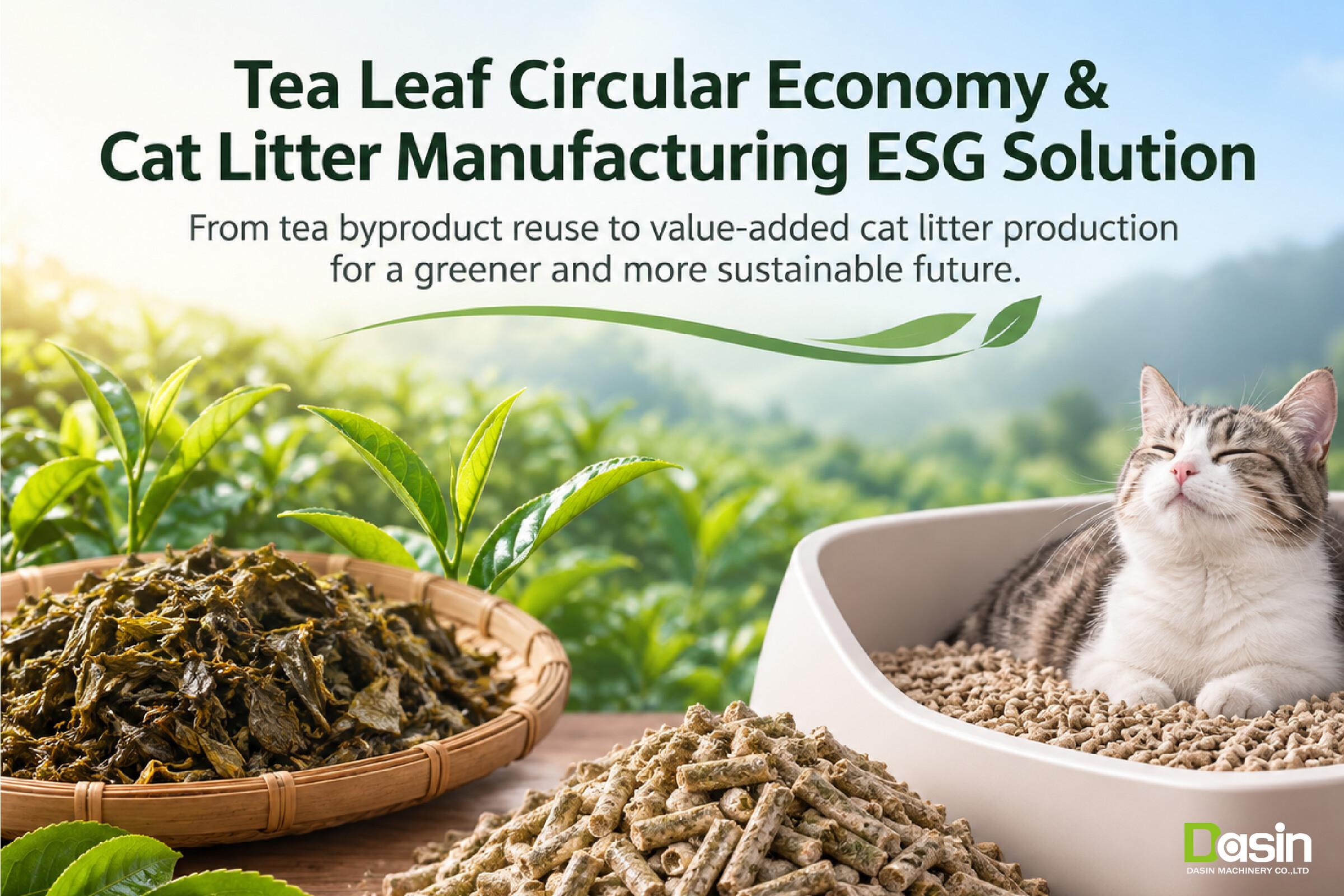
Tea By-product Recycling & Cat Litter Manufacturing ESG Solutions | Tea By-product Utilization & Equipment Integration
From the collection and processing of tea by-products to plant-based cat litter manufacturing, equipment integration can help businesses establish a more complete resource circulation process.
By integrating tea by-product processing equipment with cat litter manufacturing equipment, businesses can explore opportunities to reuse organic by-products and introduce them into further processing and product manufacturing.
The overall process can be developed as:
Tea By-products → Material Processing → Recovered Materials → Cat Litter Manufacturing → Circular Products
Making ESG more than a corporate concept by putting it into practice through equipment, production processes, and resource utilization.
Tea By-product Recycling, Used Tea Leaf Recycling, Tea Waste Utilization, Circular Economy, Circular Economy Equipment, Cat Litter Manufacturing Equipment, ESG Solutions
Building a New Resource Cycle from Tea By-products
Tea beverage businesses, tea processors, and food-related industries can generate used tea leaves, tea residues, and other tea by-products during their operations.
These materials may traditionally be treated as organic waste requiring collection, transportation, or disposal.
As ESG, the circular economy, and resource utilization become increasingly important, businesses are beginning to rethink:
Can used tea leaves and tea by-products be further processed and utilized?
With suitable tea by-product processing equipment, raw materials can be evaluated and processed according to tea type, moisture content, generation volume, and intended application.
After processes such as dehydration, drying, size reduction, mixing, and other necessary treatments, the processed material can be evaluated for potential use as an ingredient in plant-based cat litter or other products.
Our approach is designed to help businesses move from:
Tea By-products ➡︎ Processing ➡︎ Reuse
toward a more complete circular economy model:
Tea Resource Recovery ➡︎ Material Processing ➡︎ Product Manufacturing ➡︎ Circular Utilization
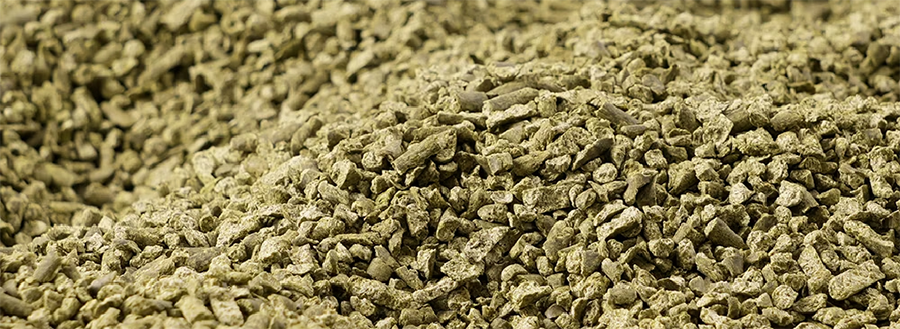
What Is a Tea Resource Recycling & Cat Litter ESG Solution?
A Tea Resource Recycling & Cat Litter ESG Solution integrates tea by-product processing, material preparation, and plant-based cat litter manufacturing into a connected production workflow.
This does not mean directly converting used tea leaves into cat litter.
Instead, tea by-products need to undergo appropriate material processing first. The processed materials can then be evaluated according to the cat litter formulation, physical properties, forming requirements, production capacity, and final product specifications.
For example:
Tea By-products
⬇
Collection & Raw Material Management
⬇
Dehydration / Drying
⬇
Size Reduction & Material Processing
⬇
Material Mixing
⬇
Cat Litter Forming
⬇
Drying / Cooling
⬇
Screening
⬇
Plant-based Cat Litter
The actual equipment configuration and production workflow should be planned according to the characteristics of the tea raw materials, daily processing volume, formulation requirements, product specifications, and target production capacity.
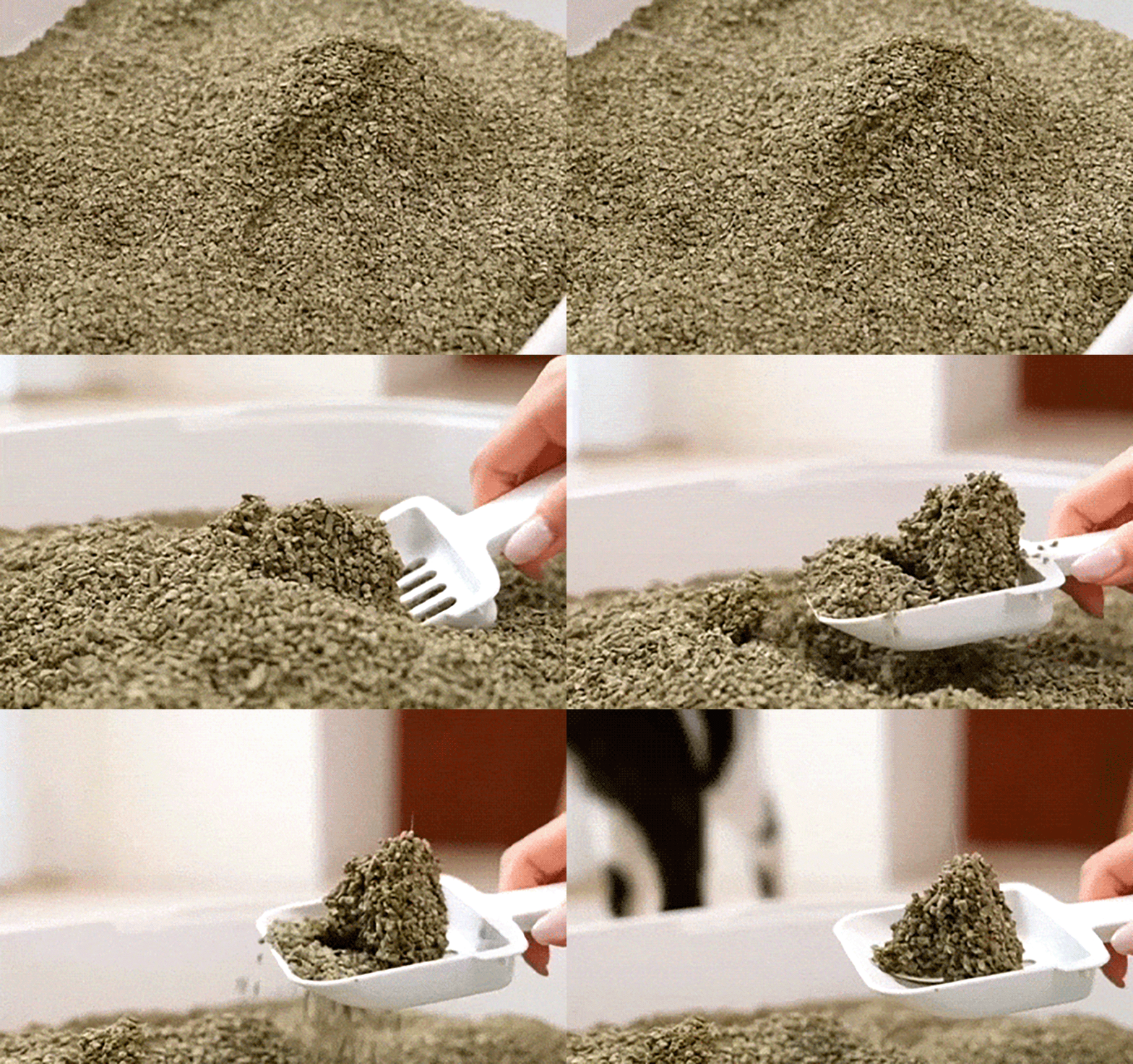
What Are Tea By-products?
Tea by-products can vary depending on the type of tea, processing method, and actual application.
Common tea by-products may include:
● Used tea leaves
● Tea residues
● Tea leaf fragments
● Plant-based materials generated during tea processing
● Other tea processing by-products
Different tea by-products may have different moisture levels, fiber structures, particle sizes, and physical properties. Therefore, their processing requirements can also vary.
When planning a tea resource recycling system, businesses should consider:
Tea Type × Moisture Content × Daily Generation Volume × Material Characteristics × Intended Application
This is why circular economy equipment planning should not focus on a single machine, but rather on the complete material processing workflow.
How Can Used Tea Leaves Be Processed and Reused?
Used tea leaves typically contain a certain amount of moisture. If they are intended for further processing, their physical condition may first need to be improved.
Depending on the raw material and intended application, the following processing methods can be evaluated.
Dehydration
➤ Reducing the moisture content of tea by-products can improve subsequent storage, transportation, and processing conditions.
Drying
➤ Further reducing moisture content can make processed tea by-products more suitable for downstream processing.
Size Reduction
➤ Tea materials can be reduced or adjusted to the appropriate particle size according to formulation and processing requirements.
Mixing
➤ Processed tea materials can be uniformly mixed with other raw materials according to product formulation requirements.
Forming
➤ The mixed materials can then be processed into particles or other forms according to the requirements of the final product.
Further Processing
➤ After material preparation, additional processing and quality management can be carried out according to the specific product requirements.
It is important to note that not all tea by-products are directly suitable for cat litter manufacturing.
Actual applications should be evaluated through material testing and process assessment based on raw material characteristics, product formulation, processing conditions, product specifications, and applicable requirements.
Our role is therefore focused on equipment integration and processing workflow planning, helping businesses develop a resource circulation solution based on their actual requirements.
From Tea By-products to Plant-based Cat Litter
Plant-based cat litter manufacturing requires careful consideration of raw material characteristics and final product requirements.
In addition to the source of the raw materials, manufacturers may need to evaluate:
● Moisture content
● Particle size
● Formability
● Particle strength
● Absorption performance
● Dust control
● Drying conditions
● Final product specifications
Therefore, if tea by-products are being considered for use in plant-based cat litter, appropriate material processing and formulation evaluation are required.
A conceptual process may include:
Tea By-products ➡︎ Dehydration ➡︎ Drying ➡︎ Size Reduction ➡︎ Material Mixing ➡︎ Cat Litter Forming ➡︎ Drying / Cooling ➡︎ Screening ➡︎ Plant-based Cat Litter
By integrating upstream tea by-product processing equipment with downstream cat litter manufacturing equipment, businesses can establish a complete equipment workflow from material recovery and processing to product manufacturing.
How Can Tea & Cat Litter Equipment Be Integrated into a Circular Economy Solution?
The core of a circular economy equipment solution is not a single machine, but the integration of equipment across different processing stages.
● Upstream | Tea By-product Collection
Establish a centralized collection and management process for tea by-products so that materials can enter the downstream processing workflow consistently.
↓
● Material Processing | Dehydration & Drying
Depending on the moisture content and characteristics of the tea by-products, appropriate dehydration and drying processes can be applied.
↓
● Material Preparation | Size Reduction & Mixing
After drying, the tea materials can be reduced to the required particle size and mixed with other materials according to product formulation and processing requirements.
↓
● Downstream | Cat Litter Manufacturing
The prepared mixture enters the cat litter manufacturing process for forming, drying, cooling, and screening.
↓
● Final Stage | Circular Product
After product quality inspection, the processed material can become a plant-based cat litter product.
The overall concept can therefore be represented as:
Tea By-product Recovery → Material Processing → Recovered Materials → Cat Litter Manufacturing → Circular Product
ESG|Three Dimensions of Sustainable Tea Resource Utilization
E|Environmental
Improving the Resource Utilization of Tea By-products
Tea by-products that are treated solely as waste still require collection and disposal.
Through appropriate collection, dehydration, drying, and material processing, businesses can explore opportunities to further utilize tea by-products.
Potential environmental objectives include:
● Tea by-product management
● Used tea leaf recycling
● Organic by-product recovery
● Improved resource utilization
● Circular economy practices
● Plant-based material applications
S|Social
Connecting the Tea Beverage and Pet Product Industries
Tea resource recycling is not limited to a single industry.
Through equipment integration, by-products generated by tea beverage and tea processing businesses can potentially be connected with industries manufacturing plant-based cat litter and other products.
The concept can be represented as:
Tea Beverage Industry → Tea By-products → Material Processing → Cat Litter Manufacturing → Consumer Products
This creates opportunities for cross-industry resource utilization.
Potential social objectives include:
● Cross-industry collaboration
● Food industry resource management
● Pet product industry development
● Circular product applications
● New resource utilization models
G|Governance
Managing Circular Materials Through Standardized Processes
If tea by-products are to become raw materials for further product manufacturing, businesses need stable material management and processing workflows.
Through equipment integration and standardized processes, businesses can establish better management across:
● Raw material collection
● Material classification
● Moisture content management
● Dehydration and drying
● Size reduction
● Material mixing
● Cat litter forming
● Product drying
● Screening
● Quality management
This allows tea by-products to move from simply being treated as waste materials toward becoming managed, processed, and traceable production materials.
Circular Economy Equipment Integration | From Tea By-products to Cat Litter Manufacturing
Tea resource recycling is not simply about installing a cat litter manufacturing machine.
A complete Circular Economy Equipment Solution should integrate different processing stages according to the characteristics of the raw materials and the requirements of the final product.
The workflow can include:
Tea By-product Processing → Material Preparation → Formulation & Mixing → Cat Litter Forming → Drying & Cooling → Screening & Quality Management
Equipment planning can be evaluated according to:
● Tea by-product generation volume
● Raw material moisture content
● Tea type
● Daily processing capacity
● Particle size requirements
● Formulation requirements
● Cat litter product specifications
● Target production capacity
● Production space
● Downstream packaging requirements
Through equipment integration, businesses can develop a complete processing workflow based on their actual production requirements.
Who Can Benefit from a Tea Resource Recycling Solution?
● Tea Beverage Businesses & Tea Brands
Tea beverage businesses generating significant volumes of used tea leaves can evaluate collection and resource utilization opportunities.
● Tea Processing Businesses
By-products generated during tea processing can be evaluated for downstream processing and potential reuse according to their material characteristics.
● Food Processing Businesses
Food processors can incorporate tea and other plant-based by-products into broader resource circulation and ESG planning.
● Cat Litter Manufacturers
Cat litter manufacturers can evaluate plant-based materials and recovered resources as potential raw materials and develop suitable material preparation and cat litter manufacturing equipment.
● Recycling & Resource Recovery Businesses
Businesses specializing in recycling and resource recovery can develop equipment workflows for collecting, processing, and further utilizing tea by-products.
● Circular Economy Businesses
Companies developing circular economy products, recovered materials, or resource utilization models can evaluate equipment integration based on their raw materials and product requirements.
How We Help Plan a Tea & Cat Litter ESG Solution
Step 01|Understand the Tea Raw Materials
➤ Evaluate the tea source, tea type, daily generation volume, moisture content, and current collection method.
Step 02|Evaluate Material Processing Requirements
➤ Based on the characteristics of the tea by-products, evaluate collection, dehydration, drying, size reduction, and other pre-processing requirements.
Step 03|Plan Material Preparation
➤ According to the downstream product requirements, evaluate particle size, mixing, and other material preparation conditions.
Step 04|Plan Cat Litter Manufacturing Equipment
➤ Based on formulation, product specifications, and production capacity, evaluate cat litter forming, drying, cooling, and screening equipment.
Step 05|Integrate the Complete Processing Workflow
➤ Integrate tea by-product processing equipment with cat litter manufacturing equipment to establish a complete circular economy equipment workflow.
Step 06|Evaluate Circular Product Applications
➤ Based on raw material characteristics, formulation conditions, and product requirements, evaluate the feasibility of using tea by-products in plant-based cat litter and other circular product applications.
From Tea By-products to Circular Products
ESG is not only about reducing waste. It is also about rethinking how resources can be used.
Tea leaves do not necessarily lose all potential value after brewing or processing.
Through appropriate collection, dehydration, drying, size reduction, and further processing, businesses can explore opportunities to reuse tea by-products.
Combined with cat litter manufacturing equipment, this creates a potential workflow:
Tea By-products → Material Processing → Recovered Materials → Cat Litter Manufacturing → Circular Products
Connecting resources across different industries and creating new opportunities for material utilization.
Start with tea resource recycling and explore new possibilities for by-product utilization.
Start with equipment integration and put ESG into practice.
Frequently Asked Questions
● What is tea resource recycling?
Tea resource recycling involves collecting, processing, and evaluating used tea leaves, tea residues, and other tea by-products for potential reuse, creating a pathway from by-products to recovered materials or circular products.
● Can used tea leaves be used to make cat litter?
Used tea leaves may be considered as part of a cat litter formulation depending on their material characteristics, moisture content, processing conditions, product formulation, and final product specifications.
Not all used tea leaves are directly suitable for cat litter manufacturing. Material testing and process evaluation are required.
● What equipment is needed for used tea leaf recycling?
Depending on the raw material characteristics and intended application, the process may require collection, dehydration, drying, size reduction, mixing, and other material processing equipment.
● What equipment is needed for cat litter manufacturing?
Depending on the cat litter formulation and product specifications, the manufacturing process may include material preparation, mixing, forming, drying, cooling, and screening. The actual equipment configuration should be planned according to production capacity and product requirements.
● What is Circular Economy Equipment?
Circular Economy Equipment refers to equipment used to process and transform by-products or recoverable materials so they can potentially re-enter a production process or become raw materials for new products.
● Who can benefit from a tea resource recycling solution?
Tea beverage brands, tea processors, food processing businesses, recycling and resource recovery companies, cat litter manufacturers, and businesses developing circular economy products can evaluate this type of solution according to their specific raw materials and production requirements.
Tea By-product Recycling & Cat Litter Manufacturing ESG Solutions
From Tea By-product Recovery to Circular Product Manufacturing
If you are planning a tea by-product recycling project, plant-based cat litter manufacturing line, or circular economy equipment system, we can evaluate your raw materials, generation volume, processing requirements, and product specifications to develop an appropriate equipment integration solution.
From tea by-product processing to material preparation.
From material preparation to cat litter manufacturing.
From individual equipment to a complete circular economy solution.