
How to Estimate Your Daily Production Requirements Before Choosing a Commercial Sugarcane Juicer | Dasin News and Events | Made in Taiwan Commercial Juicers & Shaking Machines for Beverages and Drinks Manufacturer | Dasin Machinery Co., Ltd.
Dasin How to Estimate Your Daily Production Requirements Before Choosing a Commercial Sugarcane Juicer. Dasin - Specializes in assisting beverage shops, bubble tea shops, juice shops, restaurants, etc., providing beverage and juice making machine.. Dasin Machinery is located in Caotun, Nantou, Taiwan, which is a professional manufacturer of food machinery. Our company was called Shengfa Food Machinery in early times, which started to produce commercial juicers and do OEM since 1975. We continually accumulate our experience in OEM and ODM. Meanwhile we constantly develop new products to fulfill the needs of our customers.
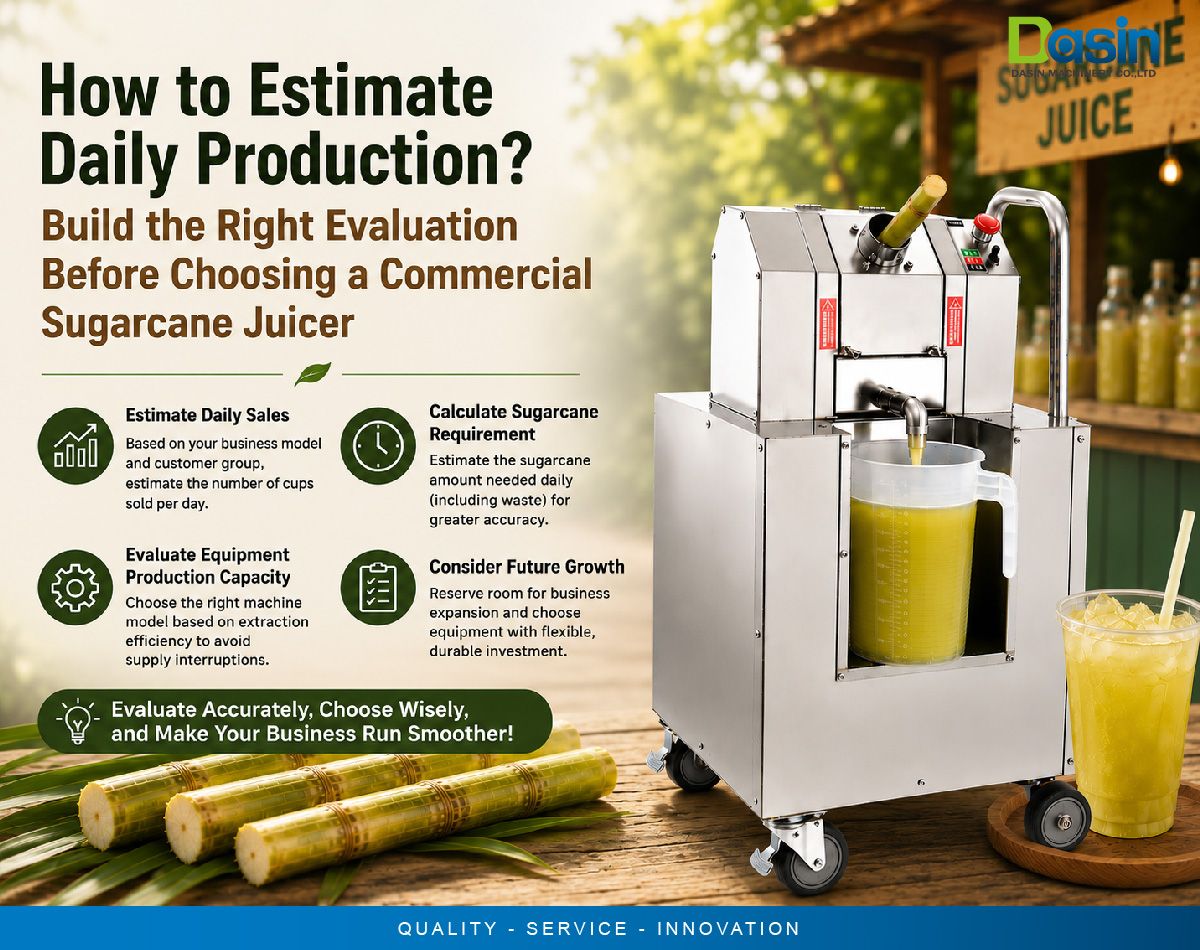
How to Estimate Your Daily Production Requirements Before Choosing a Commercial Sugarcane Juicer
DASIN sugarcane squeezer, different from traditional sugarcane juicer with exposed rollers, for sake of health, the machine is designed with protecting cover to prevent dust or insects from contacting with rollers. For safe operation, machine is designed to automatic power off while removing protecting cover.
Stronger 304 stainless steel solid roller with higher durability is adapted to improve juice yield.
How to Estimate Your Daily Production Requirements Before Choosing a Commercial Sugarcane Juicer
Selecting a commercial sugarcane juicer begins with understanding your production requirements—not comparing equipment specifications.
One of the most common questions business owners ask is:
『"How much production capacity do I actually need?"』
Although the question seems straightforward, the answer varies from one business to another.
The right equipment depends not only on the number of beverages you plan to serve each day, but also on your operating model, peak production periods, and future business plans.
For this reason, establishing a realistic estimate of your daily production requirements is often more valuable than comparing machine specifications at the beginning of the purchasing process.
Daily Demand Is Different from Equipment Capacity
Before estimating production requirements, it is important to distinguish between two concepts that are often confused.
「Daily demand」 refers to the amount of product your business expects to supply during a typical operating day.
「Equipment capacity」 refers to the amount of work a machine is capable of performing under specific operating conditions.
Although these two concepts are closely related, they are not the same.
Rather than selecting equipment based solely on its maximum capacity, businesses should first understand their own daily demand and then evaluate which equipment can reliably support those requirements.
When operational needs and equipment capabilities are properly aligned, equipment planning becomes more effective and sustainable.
● Step 1 — Estimate a Typical Business Day
When estimating production requirements, avoid using your busiest day as the starting point.
Instead, begin by estimating the number of sugarcane beverages your business expects to prepare during a typical operating day.
If your business has not yet opened, you can make an initial estimate based on your business model, target customers, product offerings, and expected customer traffic.
The objective is not to produce a perfect forecast, but to establish a realistic baseline for equipment planning.
● Step 2 — Identify Your Peak Operating Periods
Daily volume is only part of the equation.
It is equally important to understand when customer demand occurs.
Some businesses experience steady customer traffic throughout the day.
Others serve most of their customers during lunch, afternoon, dinner, weekends, or seasonal tourism periods.
For example, two businesses may each sell 200 sugarcane beverages per day.
A neighborhood beverage shop may spread those sales evenly throughout the day.
A tourist attraction, however, may need to serve most customers within only a few hours.
Although total daily demand is identical, the production requirements are very different.
When evaluating commercial equipment, businesses should consider both total daily demand and peak production periods.
● Step 3 — Consider Future Business Growth
Commercial equipment is typically expected to support business operations for many years.
For that reason, future development should also be included in the planning process.
Questions worth considering include:
☛ Are you planning to introduce additional beverage products?
☛ Will you open additional locations?
☛ Do you expect daily production requirements to increase?
☛ Are franchise expansion or business growth part of your long-term strategy?
Equipment does not need to satisfy every future scenario, but allowing reasonable room for growth often reduces the need for premature equipment replacement.
● Understanding Your Requirements Is More Important Than Comparing Specifications
Many first-time equipment buyers immediately begin comparing:
☛ Which machine operates the fastest?
☛ Which model offers the highest specifications?
☛ Which equipment has the lowest purchase price?
Without a clear understanding of operational requirements, however, these comparisons often provide little practical value.
An effective purchasing process begins with defining your business requirements first, then evaluating which equipment best supports your operation.
When this sequence is followed, equipment selection becomes more objective and significantly easier.
Purchasing Tip
Avoid selecting equipment based solely on your ideal future sales target.
Instead, begin with the number of products your business realistically expects to supply each day, while allowing reasonable capacity for future growth.
Equipment that matches actual operational requirements generally delivers better long-term business value than equipment selected simply because it offers the highest specifications.
Dasin Insight
When helping businesses evaluate commercial sugarcane juicers, our first discussion is rarely about equipment models.
Instead, we begin by understanding daily production requirements, business operations, and customer demand patterns.
Successful equipment planning depends not only on production volume, but also on workflow, operating rhythm, and long-term business objectives.
The clearer these requirements become, the easier it is to identify equipment that supports reliable and sustainable business operations.
Note: The observations above are based on Dasin's practical experience through customer consultations, commercial equipment planning, exhibitions, and discussions with international partners. They represent first-hand industry experience rather than statistical market research.
Global Market Insight
Across international food and beverage markets, equipment planning has gradually shifted from a specification-driven approach to a demand-driven approach.
Rather than asking what a machine is capable of producing, more businesses first evaluate what their operations actually require.
This approach helps improve equipment utilization, supports long-term business planning, and creates a stronger foundation for future expansion.
As a result, production requirement analysis has become an increasingly important step in commercial equipment purchasing.
Frequently Asked Questions
● Should daily production be estimated based on weekdays or peak business days?
A typical business day should be used as the primary reference, while weekends, seasonal demand, and peak operating periods should also be considered during equipment planning.
● Can I estimate production requirements before opening my business?
Yes.
Initial estimates can be developed based on your business concept, product lineup, target market, and expected customer traffic, then refined as actual operating data becomes available.
● Does higher daily demand always require the largest equipment available?
Not necessarily.
Equipment selection should consider overall business operations, production patterns, and future growth plans rather than relying on production volume alone.
Chapter Checklist
Before continuing, confirm that you have completed the following:
✔ Estimated production requirements for a typical operating day.
✔ Identified your peak production periods.
✔ Considered future business growth.
✔ Established a clear foundation for evaluating equipment capacity.
Continue Reading
Once production requirements have been established, the next step is understanding one of the most important components of a commercial sugarcane juicer.
Many machines appear similar when comparing specifications, yet their long-term performance, extraction efficiency, and durability are often determined by a single core component.
- Related Products
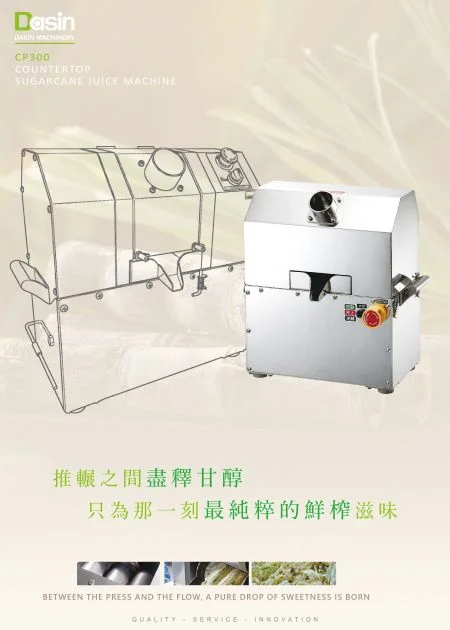
CP300 Countertop Sugarcane Juice Machine
CP300
DASIN desktop sugarcane squeezer, different from traditional sugarcane juicer with exposed rollers, for sake of health, the machine is designed with protecting...
Details Add to List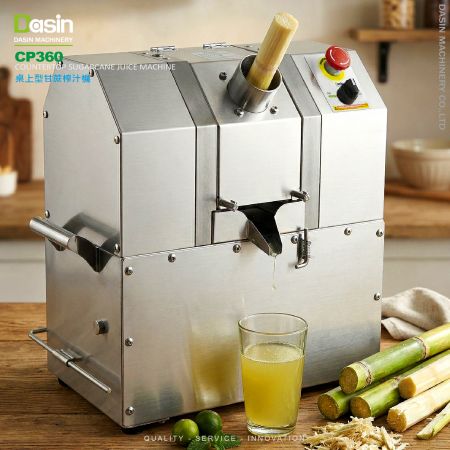
CP360 Countertop Sugarcane Juice Machine
CP360
DASIN desktop sugarcane squeezer, different from traditional sugarcane juicer with exposed rollers, for sake of health, the machine is designed with protecting...
Details Add to List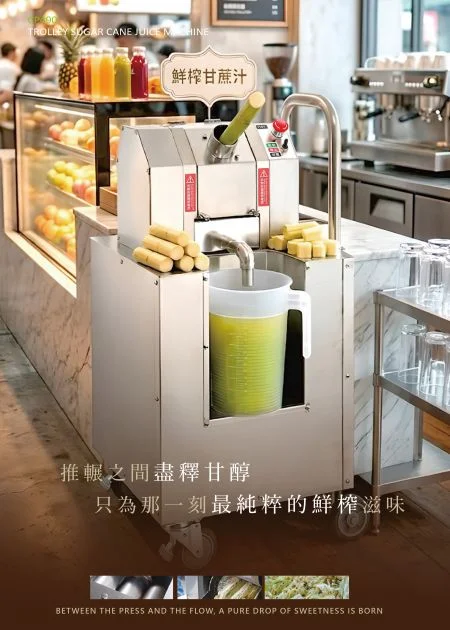
CP490 Trolley Sugar cane Juice Machine
CP490
DASIN trolley sugarcane squeezer, easy to move around, different from traditional sugarcane juicer with exposed rollers, for sake of health, the machine...
Details Add to List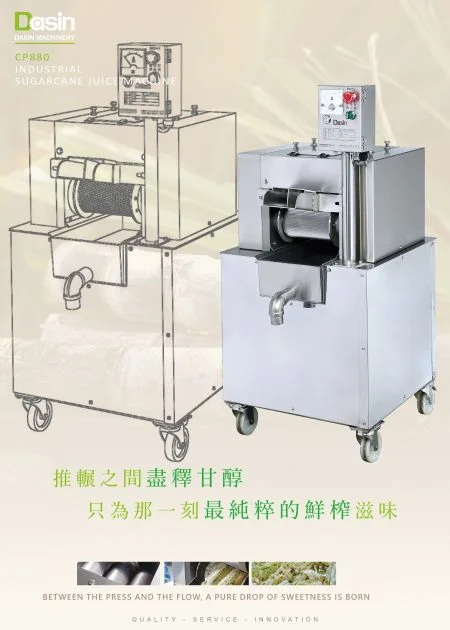
CP880 Industrial Sugarcane Juice Machine
CP880
DASIN Sugarcane Squeezer for Factory Use, six stainless steel rollers for three times of continuous squeezing for best juice yield, different from traditional...
Details Add to List
Popular Products
 Download
 How to Estimate Your Daily Production Requirements Before Choosing a Commercial Sugarcane Juicer | Made in Taiwan Commercial Juicers & Shaking Machines for Beverages and Drinks Manufacturer | Dasin Machinery Co., Ltd.
Located in Taiwan since 2010, Dasin Machinery Co., Ltd. has been a food machinery manufacturer. Their main products, including Commercial Juicers, Shaking Machines for Beverages and Drinks, Powder Dispensers, Industrial Juicers and Commercial Tapioca Pearls Machines with ISO 9001 certification.
Dasin Machinery is located in Caotun, Nantou, Taiwan, which is a professional manufacturer of food machinery. Our company was called Shengfa Food Machinery in early times, which started to produce commercial juicers and do OEM since 1975. We continually accumulate our experience in OEM and ODM. Meanwhile we constantly develop new products to fulfill the needs of our customers. Over 40 years of designing and manufacturing experience for commercial juicers, 70% to 80% market share in juice factory and beverage store business of Taiwan.
Dasin has been offering customers high-quality beverage and drink commercial machines, both with advanced technology and 40 years of experience, Dasin ensures each client's demands are met.