
Before Comparing Commercial Sugarcane Juicers, Start by Understanding Your Business Needs | Dasin News and Events | Made in Taiwan Commercial Juicers & Shaking Machines for Beverages and Drinks Manufacturer | Dasin Machinery Co., Ltd.
Dasin Before Comparing Commercial Sugarcane Juicers, Start by Understanding Your Business Needs. Dasin - Specializes in assisting beverage shops, bubble tea shops, juice shops, restaurants, etc., providing beverage and juice making machine.. Dasin Machinery is located in Caotun, Nantou, Taiwan, which is a professional manufacturer of food machinery. Our company was called Shengfa Food Machinery in early times, which started to produce commercial juicers and do OEM since 1975. We continually accumulate our experience in OEM and ODM. Meanwhile we constantly develop new products to fulfill the needs of our customers.
Before Comparing Commercial Sugarcane Juicers, Start by Understanding Your Business Needs
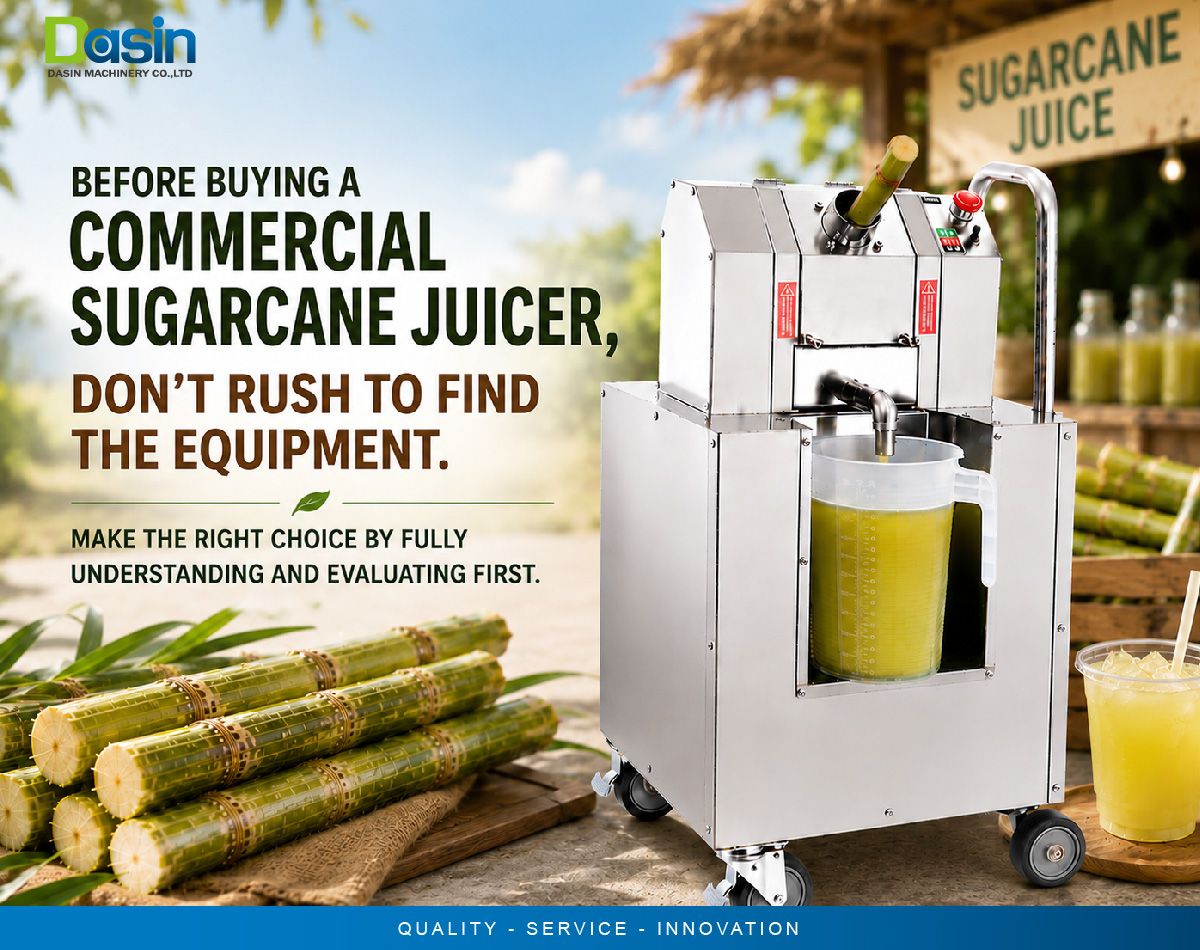
DASIN sugarcane squeezer, different from traditional sugarcane juicer with exposed rollers, for sake of health, the machine is designed with protecting cover to prevent dust or insects from contacting with rollers. For safe operation, machine is designed to automatic power off while removing protecting cover.
Stronger 304 stainless steel solid roller with higher durability is adapted to improve juice yield.
Before Comparing Commercial Sugarcane Juicers, Start by Understanding Your Business Needs
When businesses begin planning to invest in a commercial sugarcane juicer, the first instinct is often to search for equipment.
Some compare different brands, others focus on machine specifications, while many simply look for the "best" or "most recommended" commercial sugarcane juicer available.
These are natural purchasing behaviors.
However, through years of working with beverage businesses, food manufacturers, and commercial equipment buyers, we have observed that many purchasing challenges arise long before equipment comparisons even begin.
The most common issue is simple:
『Businesses start comparing machines before clearly defining what they actually need.』
Without a clear understanding of operational requirements, comparing equipment specifications rarely leads to the best decision.
For this reason, the first step in purchasing a commercial sugarcane juicer should not be selecting equipment—it should be identifying your business requirements.
Why Is Defining Your Requirements So Important?
A commercial sugarcane juicer is a long-term investment designed to support daily business operations.
Its role extends far beyond extracting sugarcane juice.
The right equipment influences production efficiency, workflow organization, staff operation, and long-term operational performance.
When equipment evaluations begin before business requirements are clearly defined, buyers often encounter situations such as:
☛ Every machine appears suitable, making comparisons increasingly difficult.
☛ Different suppliers recommend different solutions without a clear basis for evaluation.
☛ Technical specifications become the primary focus while practical operational needs are overlooked.
☛ Equipment performs as expected technically but does not integrate efficiently into daily operations.
In many cases, these issues are not caused by the equipment itself, but by the absence of a structured purchasing process.
Three Steps to Complete Before Comparing Equipment
An effective purchasing process begins with understanding your business rather than comparing machines.
Before evaluating commercial sugarcane juicers, complete the following three steps.
● Step 1 — Identify Your Business Environment
Where will the equipment be used?
Different business environments require different equipment considerations.
Typical applications include:
✔ Beverage Shops
✔ Sugarcane Juice Stores
✔ Night Markets
✔ Food Markets
✔ Tourist Attractions
✔ Hotels and Restaurants
✔ Central Kitchens
✔ Food Processing Facilities
Understanding your operating environment provides the foundation for selecting appropriate equipment.
● Step 2 — Define the Problem You Want the Equipment to Solve
Every business invests in equipment for different reasons.
Some aim to increase production efficiency.
Others want to improve customer experience through live juice preparation.
Some require greater product consistency, while others are preparing for business expansion or multiple locations.
The clearer your objectives, the easier it becomes to identify the most suitable equipment.
● Step 3 — Establish Your Evaluation Criteria
Before comparing different machines, establish your own evaluation standards.
For example:
☛ What is the most important factor for your business?
☛ Which functions are essential?
☛ Which features may become important as your business grows?
Once these priorities are defined, comparing different equipment becomes more objective and more efficient.
Four Common Purchasing Mistakes to Avoid
If the previous three steps have not yet been completed, avoid making purchasing decisions based solely on the following factors.
● Comparing Price First
Price is an important consideration, but it should not be the starting point of the purchasing process.
● Choosing the Highest Specifications
Higher specifications do not automatically create better business results.
The best equipment is the equipment that matches your operational requirements.
● Copying Another Business's Equipment Configuration
Every business has different products, workflows, operating environments, and production goals.
Equipment that performs well in one operation may not be the best solution for another.
● Requesting Quotations Before Requirements Are Clear
Without clearly defined purchasing requirements, comparing quotations becomes difficult because each proposal may address different operational needs.
Dasin Insight
When discussing commercial sugarcane juicer solutions with customers, we rarely begin by recommending equipment.
Instead, we begin by understanding the customer's business objectives.
The same machine may deliver completely different value depending on the operating environment and production requirements.
Our experience shows that businesses that clearly define their operational needs before evaluating equipment usually make more confident purchasing decisions and achieve better long-term results.
Global Market Insight
Around the world, commercial equipment purchasing has gradually shifted from a product-focused approach to a business-focused approach.
Rather than simply comparing machine specifications, more companies now evaluate whether equipment can support operational workflows, improve efficiency, simplify management, and accommodate future business growth.
Today, commercial equipment is increasingly viewed as part of an overall business strategy rather than a standalone purchase.
Frequently Asked Questions
● Should I request quotations before defining my requirements?
It is generally more effective to identify your operational requirements first. Once your purchasing objectives are clear, equipment proposals and quotations become much easier to compare.
● Can I select equipment before finalizing my product lineup?
It is recommended to establish your product plan first. Equipment should support your business model rather than determine it.
● Do existing businesses also need to reassess their requirements?
Yes.
Businesses introducing new products, replacing equipment, expanding production capacity, or opening additional locations should review their operational requirements before investing in new equipment.
Chapter Checklist
Before moving on to the next chapter, confirm that you have completed the following:
✔ Identified where the equipment will be used.
✔ Clarified the primary business objective for this investment.
✔ Established the key criteria that will be used when evaluating equipment.
Once these three steps are complete, you are ready to evaluate the next purchasing consideration—production capacity.
Continue Reading
After defining your purchasing requirements, the next question becomes:
『How much daily production capacity does your business actually need?』
Many equipment investments fail to achieve their expected results because production requirements are either overestimated or underestimated during the planning stage.
- Related Products
-
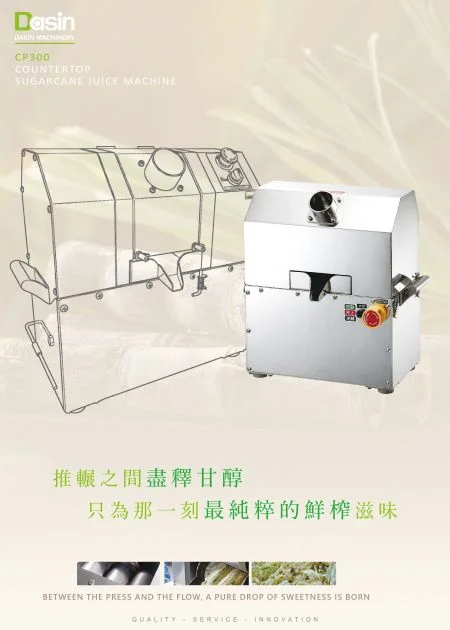
CP300 Countertop Sugarcane Juice Machine
CP300
DASIN desktop sugarcane squeezer, different from traditional sugarcane juicer with exposed rollers, for sake of health, the machine is designed with protecting...
Details Add to List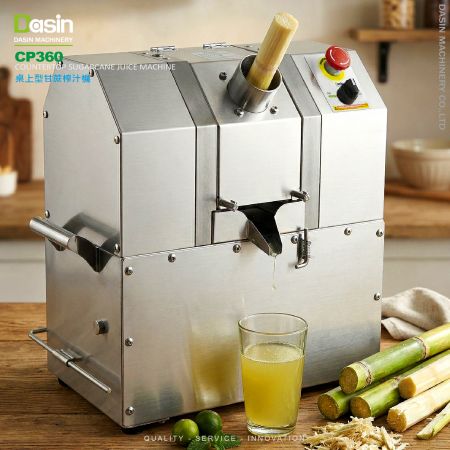
CP360 Countertop Sugarcane Juice Machine
CP360
DASIN desktop sugarcane squeezer, different from traditional sugarcane juicer with exposed rollers, for sake of health, the machine is designed with protecting...
Details Add to List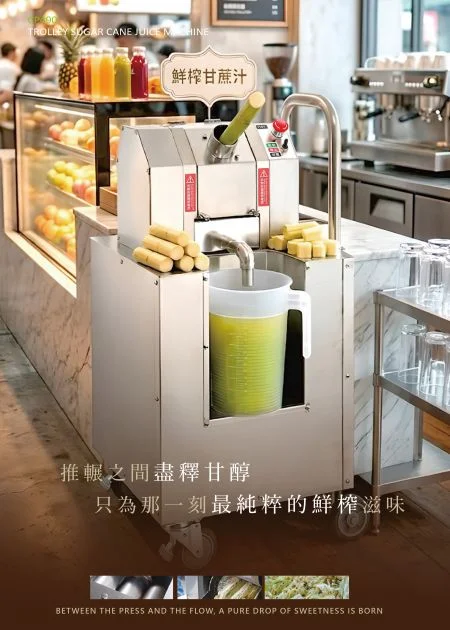
CP490 Trolley Sugar cane Juice Machine
CP490
DASIN trolley sugarcane squeezer, easy to move around, different from traditional sugarcane juicer with exposed rollers, for sake of health, the machine...
Details Add to List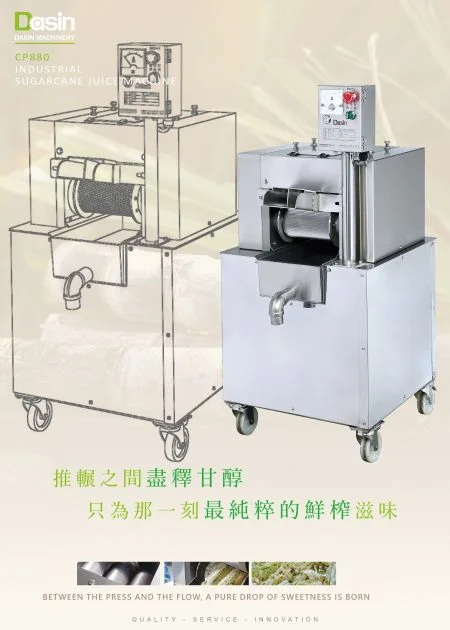
CP880 Industrial Sugarcane Juice Machine
CP880
DASIN Sugarcane Squeezer for Factory Use, six stainless steel rollers for three times of continuous squeezing for best juice yield, different from traditional...
Details Add to List
Popular Products
 Download
 Before Comparing Commercial Sugarcane Juicers, Start by Understanding Your Business Needs | Made in Taiwan Commercial Juicers & Shaking Machines for Beverages and Drinks Manufacturer | Dasin Machinery Co., Ltd.
Located in Taiwan since 2010, Dasin Machinery Co., Ltd. has been a food machinery manufacturer. Their main products, including Commercial Juicers, Shaking Machines for Beverages and Drinks, Powder Dispensers, Industrial Juicers and Commercial Tapioca Pearls Machines with ISO 9001 certification.
Dasin Machinery is located in Caotun, Nantou, Taiwan, which is a professional manufacturer of food machinery. Our company was called Shengfa Food Machinery in early times, which started to produce commercial juicers and do OEM since 1975. We continually accumulate our experience in OEM and ODM. Meanwhile we constantly develop new products to fulfill the needs of our customers. Over 40 years of designing and manufacturing experience for commercial juicers, 70% to 80% market share in juice factory and beverage store business of Taiwan.
Dasin has been offering customers high-quality beverage and drink commercial machines, both with advanced technology and 40 years of experience, Dasin ensures each client's demands are met.