
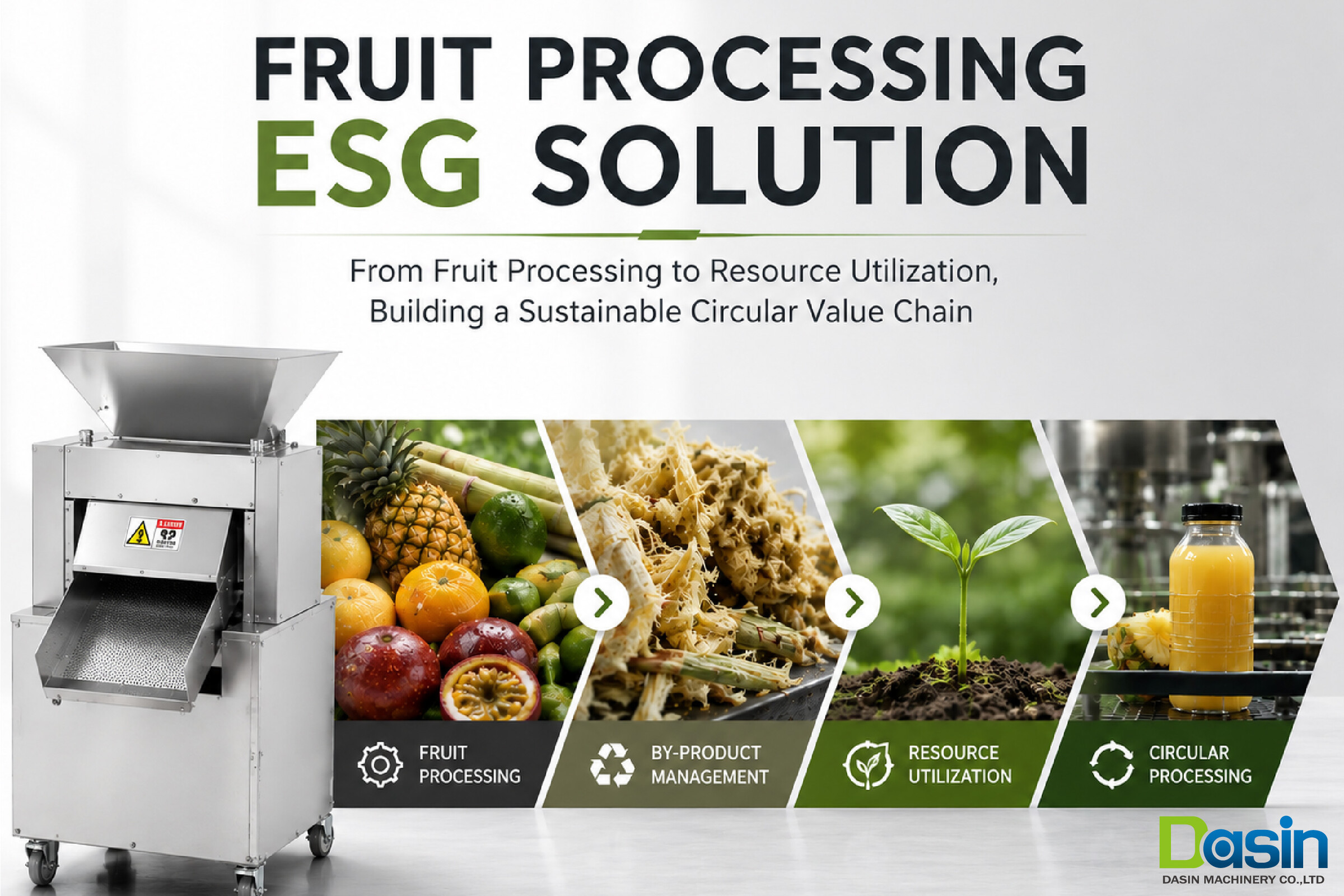
Fruit Processing ESG Solutions | Fruit Processing Equipment & Circular Resource Integration
From fruit washing and pre-processing to juice extraction, by-product processing, and further utilization, we integrate fruit processing equipment to help businesses build a more complete processing workflow.
By improving raw material utilization and managing processing by-products more effectively, businesses can explore practical approaches to ESG, resource efficiency, and the circular economy.
Food Processing ESG,ESG Solutions,Circular Economy,Circular Economy Equipment,Food Processing Equipment Integration,Fruit Processing,Fruit Processing Equipment,Fruit Processing Workflow,Fruit By-product Processing,Fruit By-product Utilization,Fruit Pulp / Pomace Processing,Fruit Juice Processing Equipment,Sustainable Food Processing
Building a More Complete Resource Cycle Through Fruit Processing
Fruit processing is not limited to turning fresh fruit into juice or food ingredients.
During washing, cutting, juice extraction, separation, and other processing stages, various by-products may be generated, including fruit peels, seeds, pulp, pomace, and other solid materials.
Traditionally, these materials may be treated simply as waste that needs to be removed or disposed of.
As ESG, resource efficiency, and the circular economy become increasingly important in the food processing industry, businesses are looking at new ways to manage these materials.
Can fruit processing by-products be further processed or utilized instead of being treated solely as waste?
With suitable fruit processing equipment and downstream processing solutions, businesses can develop a more complete workflow based on fruit type, processing method, production capacity, and intended application.
Our approach is designed to help businesses move beyond conventional fruit processing toward:
Fruit Processing ➡︎ By-product Processing ➡︎ Resource Utilization ➡︎ Circular Processing
Creating a more integrated Fruit Processing ESG Solution.
What Is a Fruit Processing ESG Solution?
A Fruit Processing ESG Solution uses fruit processing equipment as the foundation for improving how raw materials, production processes, by-products, and resources are managed.
Every business has different fruit varieties, production volumes, product requirements, and processing conditions. Therefore, ESG implementation should not be viewed as simply adding a single piece of equipment.
Instead, the entire fruit processing workflow should be considered.
For example:
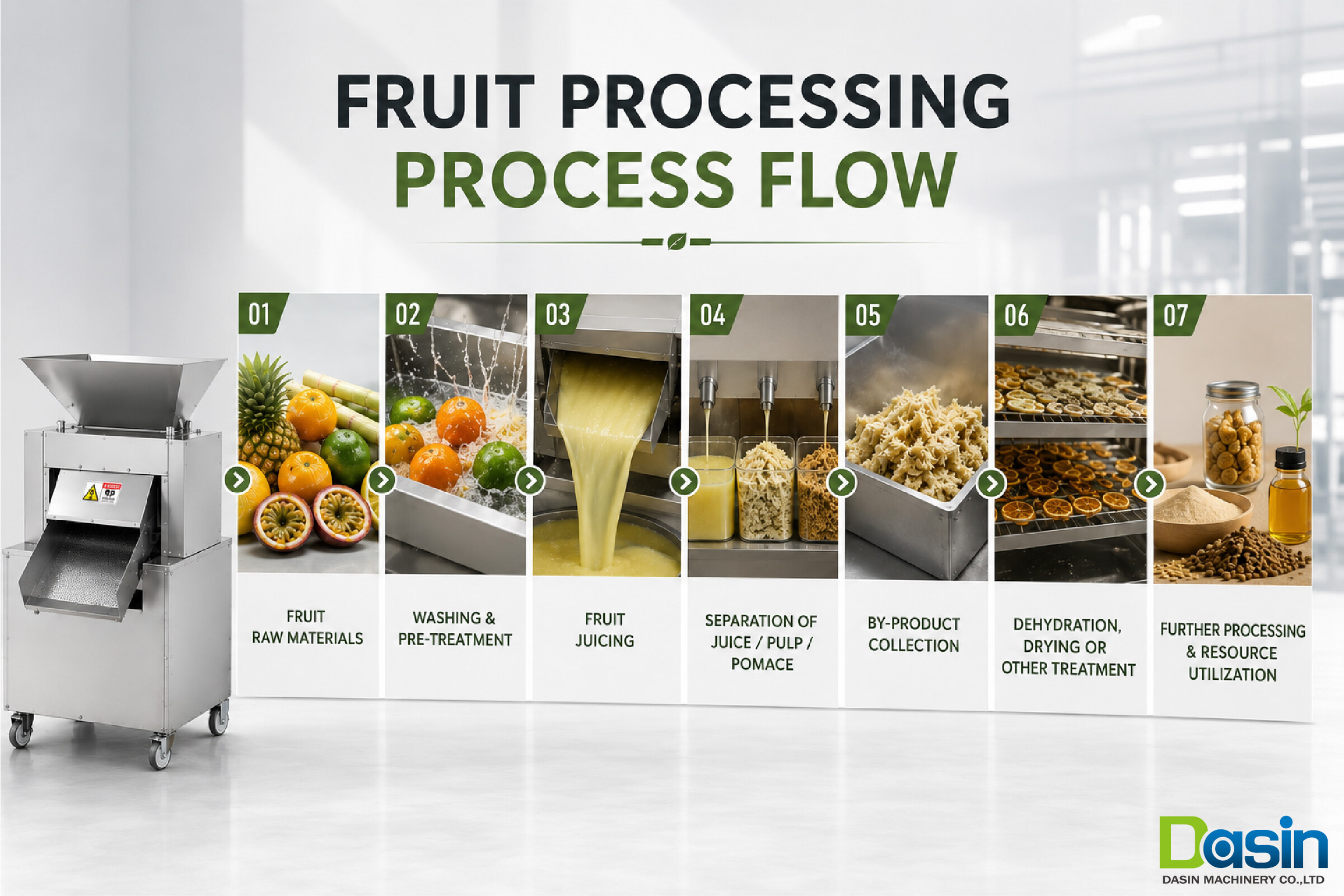
Fresh Fruit
⬇
Washing & Pre-processing
⬇
Juice Extraction
⬇
Juice / Pulp / Pomace Separation
⬇
By-product Collection
⬇
Dehydration, Drying or Further Processing
⬇
Further Processing & Resource Utilization
By integrating equipment across different processing stages, businesses can better understand each step of production while evaluating opportunities for by-product processing and resource utilization.
What By-products Are Generated During Fruit Processing?
The types of fruit processing by-products generated will vary depending on the fruit variety and processing method.
Common fruit processing by-products may include:
● Fruit peels
● Fruit seeds
● Fruit pulp
● Fruit pomace
● Solid materials separated during juice processing
● Other processing residues
Different materials have different moisture levels, fiber structures, physical properties, and compositions. As a result, their processing requirements can also vary.
Not all fruit by-products are suitable for the same processing method.
When planning fruit by-product processing equipment, businesses should consider:
Fruit Type × By-product Characteristics × Moisture Content × Daily Processing Volume × Intended Application
This is an important difference between an integrated Fruit Processing ESG Solution and simply purchasing individual equipment.
How Can Fruit By-products Be Processed After Juice Extraction?
Fruit peels, seeds, pulp, and pomace generated during juice extraction may still contain significant moisture.
Depending on the characteristics of the material and its intended application, several processing options can be evaluated.
● Separation
Different materials can be separated according to their physical characteristics, making subsequent processing and management more efficient.
● Dehydration
Reducing moisture content can help decrease the volume and weight of materials and may improve handling, storage, and downstream processing.
● Drying
Drying can be considered according to the characteristics of the raw material and its intended application, helping prepare the material for further processing.
● Size Reduction
Processed fruit by-products can be reduced in size according to downstream processing requirements.
● Further Utilization
After appropriate processing, the material can be evaluated for potential downstream applications based on its characteristics and intended use.
The appropriate processing method and final utilization must be evaluated according to the actual raw material, processing conditions, applicable requirements, and intended application.
For this reason, our approach focuses on equipment integration and process planning, rather than making a single, fixed utilization claim for all fruit processing by-products.
How Can Fruit Processing Equipment Be Integrated into an ESG Solution?
A single fruit juicer primarily addresses juice extraction.
However, businesses looking to develop a more complete circular processing workflow need to consider the entire production process and how different types of equipment can work together.
● Upstream | Fruit Preparation
After fresh fruit enters the production process, washing and pre-processing are typically required.
Suitable fruit washing and pre-processing equipment can help establish a more consistent and standardized raw material preparation process.
⬇
● Processing Stage | Juice Extraction & Separation
After pre-processing, the fruit moves into the juice extraction stage.
Depending on the fruit variety and production requirements, suitable fruit juice processing equipment or commercial fruit juicing equipment can be selected.
In addition to producing juice, businesses can also consider how fruit peels, seeds, pulp, and pomace generated during extraction are collected and managed.
⬇
● Downstream | By-product Processing
After juice extraction, the resulting by-products can be collected and further processed through separation, dehydration, drying, size reduction, or other suitable processes.
The actual equipment configuration should be determined according to the characteristics of the by-products and their intended application.
⬇
● Further Processing | Resource Utilization
After appropriate processing, the materials can be evaluated for further utilization based on their characteristics and specific application requirements.
This allows a conventional fruit processing workflow to evolve from:
“Juice Extraction ➡︎ End of Process”
toward:
“Juice Extraction ➡︎ By-product Processing ➡︎ Resource Utilization”
ESG|Three Dimensions of Sustainable Fruit Processing
E|Environmental
Improving Fruit Resource Utilization
Fruit processing by-products that are treated solely as waste may require additional handling and disposal.
Through appropriate collection, separation, and downstream processing, businesses can explore more efficient ways to manage these materials and improve overall resource utilization.
Potential environmental objectives include:
● Fruit processing by-product management
● Improved raw material utilization
● Reduction of processing waste
● Resource circulation
● Circular economy practices
S|Social
Building a More Integrated Food Processing Value Chain
Fruit processing ESG is not only about environmental impact. It can also support greater efficiency and development across the food processing industry.
By integrating fruit processing equipment with downstream processing solutions, businesses can establish more comprehensive production workflows while exploring additional applications for processing by-products.
Potential social objectives include:
● Food processing industry development
● Production workflow optimization
● Improved food processing efficiency
● Cross-industry collaboration
● Resource utilization opportunities
G|Governance
Improving Processing Management Through Standardized Workflows
Governance within ESG also includes how businesses manage production processes, equipment, materials, and resources.
Through equipment planning and standardized workflows, businesses can establish clearer management across:
● Raw material intake
● Processing procedures
● Equipment operation
● By-product generation
● By-product handling
● Downstream utilization
This helps create a more systematic approach to fruit processing management and resource management.
Fruit Processing Equipment Integration | From Individual Machines to Complete Solutions
Selecting fruit processing equipment should not be based solely on the specifications of an individual machine.
Businesses should also consider the entire production workflow.
Our equipment integration approach can be planned according to:
● Fruit type
● Daily processing volume
● Product requirements
● Existing production workflow
● Type and characteristics of by-products
● Downstream utilization requirements
From fruit washing and pre-processing to juice extraction and by-product processing, equipment can be configured and integrated according to actual operational requirements.
This creates a more comprehensive Fruit Processing Equipment Integration Solution rather than relying on isolated machines.
Who Can Benefit from a Fruit Processing ESG Solution?
Fruit Processing ESG Solutions can be adapted to different production models and are suitable for a range of food and beverage businesses.
● Juice Processing Plants
For businesses processing large volumes of fruit into juice, by-product collection and downstream processing can be evaluated as part of the overall production workflow.
● Food Processing Facilities
Fruit processing can be integrated into broader food production systems to improve raw material utilization and processing efficiency.
● Beverage Manufacturers
From fruit preparation and juice extraction to by-product management, businesses can develop a more comprehensive beverage processing workflow.
● Fruit Processing Businesses
Equipment can be planned according to fruit type, processing volume, product requirements, and downstream processing needs.
● Central Kitchens
Centralized food production facilities can establish standardized fruit preparation and juice processing workflows.
● Agricultural Processing Businesses
Agricultural processors can incorporate by-product management into their production processes and evaluate potential resource utilization opportunities.
How We Help Businesses Plan Their Fruit Processing Solution
Step 01|Understand Processing Requirements
➤ We first evaluate the fruit varieties, daily processing volume, product requirements, and existing production workflow.
Step 02|Analyze the Fruit Processing Workflow
➤ We review the complete process, from raw material intake, washing, and pre-processing to juice extraction and by-product generation.
Step 03|Plan Fruit Processing Equipment
➤ Based on processing capacity and production requirements, suitable fruit washing equipment, fruit juice processing equipment, and other related equipment can be evaluated.
Step 04|Evaluate By-product Processing
➤ Fruit peels, seeds, pulp, pomace, and other by-products can be evaluated for suitable collection, separation, dehydration, drying, size reduction, or other processing methods.
Step 05|Integrate the Processing Workflow
➤ Different equipment can be configured and connected according to the actual production requirements to create an integrated fruit processing equipment solution.
Step 06|Evaluate Resource Utilization
➤ Based on the characteristics of the processed materials and intended applications, potential downstream resource utilization options can be evaluated.
From Fruit Processing to Resource Circulation
ESG is not simply about adding an “environmentally friendly machine.”
A practical ESG equipment solution starts with the company's existing production workflow and asks:
How are raw materials being utilized?
What materials are generated during processing?
How are processing by-products managed?
Could these materials have further utilization potential?
By integrating fruit processing equipment, juice extraction equipment, and by-product processing equipment, businesses can move from a single-purpose processing workflow toward a more comprehensive circular resource model.
Start with fruit processing. Improve resource utilization.
Start with equipment integration. Put ESG into practice.
Frequently Asked Questions
● What is a Fruit Processing ESG Solution?
A Fruit Processing ESG Solution applies Environmental, Social, and Governance principles to fruit processing operations. It may include production efficiency, by-product management, resource utilization, standardized workflows, and equipment integration.
● What are common fruit processing by-products?
Common fruit processing by-products may include fruit peels, seeds, pulp, pomace, and solid materials separated during juice processing. The actual materials generated depend on the fruit variety and processing method.
● How can fruit pomace be processed after juice extraction?
Fruit pomace processing depends on the fruit type, moisture content, composition, physical characteristics, and intended application. Potential processing methods may include separation, dehydration, drying, size reduction, and other downstream processing.
● Can fruit processing plants implement ESG through equipment?
Yes. Fruit processing plants can evaluate equipment and workflow improvements across raw material preparation, juice extraction, by-product collection, and downstream processing to develop a practical Fruit Processing ESG Solution.
● Can fruit processing equipment be integrated?
Yes. Different types of fruit processing equipment can be configured and integrated according to fruit characteristics, production volume, processing workflow, and downstream requirements.
● Who can benefit from a Fruit Processing ESG Solution?
Fruit processing ESG solutions can be considered by juice processing plants, food processing facilities, beverage manufacturers, fruit processing businesses, central kitchens, and agricultural processing companies.
Fruit Processing ESG Solutions
Building a More Complete Fruit Resource Cycle Through Equipment Integration
If you are planning a fruit processing facility, fruit juice processing line, or a solution for managing fruit processing by-products, we can evaluate your fruit varieties, processing volume, production workflow, and downstream requirements to develop a suitable Fruit Processing Equipment Integration Solution.
From fruit processing to resource utilization.
From individual equipment to integrated solutions.