
5L or 10L Commercial Tea Brewer: How to Choose the Right Capacity for Your Business | Dasin News and Events | Made in Taiwan Commercial Juicers & Shaking Machines for Beverages and Drinks Manufacturer | Dasin Machinery Co., Ltd.
Dasin 5L or 10L Commercial Tea Brewer: How to Choose the Right Capacity for Your Business. Dasin - Specializes in assisting beverage shops, bubble tea shops, juice shops, restaurants, etc., providing beverage and juice making machine.. Dasin Machinery is located in Caotun, Nantou, Taiwan, which is a professional manufacturer of food machinery. Our company was called Shengfa Food Machinery in early times, which started to produce commercial juicers and do OEM since 1975. We continually accumulate our experience in OEM and ODM. Meanwhile we constantly develop new products to fulfill the needs of our customers.
5L or 10L Commercial Tea Brewer: How to Choose the Right Capacity for Your Business
How do you choose between a 5L and a 10L commercial tea brewer? By evaluating daily drink sales, peak-hour demand, tea consumption, and available shop space, beverage businesses can identify the brewing capacity that best matches their operational needs.
Part 5 | 5L or 10L Commercial Tea Brewer: How to Choose the Right Capacity for Your Business
How do you choose between a 5L and a 10L commercial tea brewer? By evaluating daily drink sales, peak-hour demand, tea consumption, and available shop space, beverage businesses can identify the brewing capacity that best matches their operational needs.
When preparing to open a beverage shop, one of the first questions business owners ask when choosing a commercial tea brewing machine is: "Should I buy a 5L or a 10L machine?"
A larger machine may seem more convenient because it can prepare more tea in one batch. A smaller machine, on the other hand, may be more suitable for compact shops or specific brewing requirements. However, when purchasing equipment, capacity should not be the only consideration. A larger machine is not necessarily the better choice for every business.
What really matters is how much tea your shop needs to prepare each day, whether orders are concentrated during peak hours, whether different tea varieties need to be brewed separately, and whether your shop has enough space and staff to operate the equipment efficiently.
Before choosing a commercial tea brewer, estimate your actual brewing requirements first, then compare equipment capacity and operating procedures.
1. What Is the Difference Between a 5L and a 10L Commercial Tea Brewer?
The most obvious difference between 5L and 10L tea brewing machines is their stated capacity. However, capacity is not the only factor to consider. Your brewing frequency, number of tea varieties, and daily drink demand should also be taken into account.
5L Commercial Tea Brewer
If your shop's tea consumption is concentrated on a few main products, or if you prefer to prepare tea in separate batches throughout the day, a 5L machine may be worth considering.
For example, if your shop mainly sells a few regular tea-based drinks, daily sales are relatively stable, and brewing tasks can be scheduled according to business hours, you can evaluate whether a 5L capacity is sufficient for your needs.
10L Commercial Tea Brewer
If your shop consumes larger quantities of tea or needs to prepare more tea before peak hours, a 10L machine may be a better option to evaluate.
A larger capacity may reduce the frequency of some tea preparation and replenishment tasks. However, you should still consider whether different tea varieties can share the same batch, how the equipment will be operated, and how the prepared tea will be used and stored.
Choosing between 5L and 10L is not simply about comparing capacity. The important question is whether the machine can match your shop's actual brewing schedule and workflow.
2. Estimate Your Daily Tea Requirements Before Choosing a Tea Brewer
If you are unsure which capacity to choose, start by estimating your daily drink sales.
For example, suppose your shop expects to sell 200 drinks per day. Among them, 120 drinks use the same type of tea, and each drink requires an average of 250ml of tea.
The estimated daily consumption of this tea would be:
120 drinks × 250ml = 30,000ml, or 30L.
This figure represents the estimated total daily demand. It does not mean that you need to brew all 30L at once. You should also consider the quantity prepared per batch, when the tea will be used, the requirements of different tea varieties, and whether brewing needs to be divided into multiple batches.
We recommend preparing the following information first:
- Estimated daily drink sales.
- Expected sales volume for each tea variety.
- Average amount of tea used per drink.
- Drink order distribution during peak hours.
- Expected number of brewing sessions per day.
With this information, it becomes easier to determine whether a smaller capacity, a larger capacity, or different brewing schedules for different tea varieties and business hours would be more suitable.
3. Peak-Hour Brewing Demand Matters More Than Daily Total Consumption
Some beverage shops may not have particularly high total daily sales, but their orders are concentrated around lunchtime, after work, or after school.
If the prepared tea runs out just before a busy period, employees must arrange another brewing session. Even if the machine's capacity meets the shop's total daily requirements, it may not be able to keep up with a sudden increase in orders over a short period.
Therefore, when planning tea brewing capacity, you should evaluate not only total daily consumption but also tea demand during peak hours.
Start by considering these three questions:
- Which tea varieties are most frequently ordered during peak hours?
- Will the prepared tea supply be sufficient for the next wave of orders?
- If another brewing batch is needed, can employees handle other tasks at the same time?
If tea consumption increases rapidly during peak hours, you should evaluate whether the machine's capacity and brewing schedule are sufficient. If different tea varieties must be brewed separately, remember to include tea changeover and batch preparation time in your planning.
4. How Should You Plan Brewing Capacity When Your Menu Includes Many Tea Varieties?
Having a larger menu does not mean that all tea varieties can be planned using the same brewing capacity.
For example, your shop may serve black tea, green tea, oolong tea, and seasonal specialty drinks. The sales volume of each product may vary significantly. If you prepare the same quantity of every tea variety, some tea may remain unused while popular options may run out too early.
A more practical approach is to separate your main tea varieties from secondary or less frequently ordered options.
For your main tea varieties, create a clearer brewing schedule based on daily sales and peak-hour demand. For lower-volume or seasonal tea options, plan smaller batches according to actual requirements.
When selecting equipment, also consider whether different tea varieties need to be brewed separately and whether your shop's workflow can accommodate the machine's capacity.
If you are unsure how to plan your brewing process, organize your menu and estimated sales first. Then evaluate the appropriate tea brewer capacity instead of purchasing equipment first and changing your entire shop's workflow afterward.
5. Besides Capacity, What Other Features Should You Consider in a Commercial Tea Brewer?
Capacity is one of the basic specifications of a tea brewing machine. However, heating methods, stirring systems, and water quality stability can also influence daily brewing operations.
1. Heating Efficiency and Temperature Control
Different tea varieties require different brewing temperatures. When selecting equipment, check whether its heating method, available temperature range, and operating settings meet your shop's brewing requirements.
For example, the DASIN ST300 Instant Heating Tea Brewer features high-temperature instant heating of up to 99°C, allowing businesses to evaluate its application according to their specific brewing requirements.
2. Stirring System
The way tea leaves expand and mix during brewing is another factor worth considering when selecting equipment.
The DASIN ST300 features patented vortex stirring technology to help tea leaves fully expand. This provides another useful equipment feature for businesses planning their tea brewing procedures.
3. Water Quality Stability
Water quality varies by region, and the water filtration equipment used in each shop may also affect actual brewing conditions.
In 2026, DASIN added a water quality stabilizer to the ST300. This equipment-side adjustment design helps address variations caused by different water conditions and filtration systems.
Therefore, when choosing a commercial tea brewer, do not compare only 5L and 10L capacities. You should also understand the machine's heating, stirring, and water quality-related features.
6. Is a Larger Tea Brewing Capacity Always Better?
Not necessarily.
A larger machine may be suitable for shops with higher tea consumption. However, if your shop has lower sales volume, a wide variety of tea products, and frequent small-batch brewing requirements, you should evaluate whether the capacity matches your actual workflow.
Before purchasing equipment, consider these three factors:
- Demand: How much tea do you need each day, and what is the demand during peak hours?
- Workflow: Do different tea varieties need to be brewed separately? How will employees organize their tasks?
- Space: Can the machine fit into your existing counter layout while leaving enough room for operation?
Choosing a larger machine simply because it offers more capacity, without considering your menu, brewing frequency, and available space, may not deliver the expected operational benefits.
Equipment capacity should match your business requirements. Your shop should not have to take on unnecessary operational burdens just to accommodate a machine.
7. What Information Should You Prepare Before Purchasing a Commercial Tea Brewer?
Before contacting an equipment supplier, we recommend organizing your shop's basic operating information. This makes it easier to discuss and determine the right equipment configuration.
Prepare the following information:
- Your planned beverage menu.
- Estimated daily sales and the sales proportion of each main tea variety.
- Drink order demand during peak hours.
- Available space for equipment installation.
- Expected brewing frequency and staff allocation.
- Your requirements for heating, stirring, and operating functions.
If you are opening a new shop and do not yet have actual sales data, you can estimate your initial requirements based on expected customer traffic, business hours, and menu planning. After opening, adjust your brewing schedule according to actual sales performance.
For existing businesses, you can use current sales data to evaluate whether your current tea production is sufficient and whether your equipment capacity needs to be adjusted.
Frequently Asked Questions (FAQ)
Q1: Should I choose a 5L or 10L commercial tea brewer?
A: Evaluate your daily tea consumption, peak-hour demand, number of tea varieties, and brewing frequency. If your tea requirements are higher, a 10L machine may be worth considering. If you prefer smaller batches or have specific brewing requirements for different tea varieties, evaluate whether a 5L machine is more suitable.
Q2: Is a 10L tea brewer always more efficient than a 5L machine?
A: Not necessarily. A larger capacity may reduce some brewing sessions, but actual efficiency still depends on tea variety planning, peak-hour demand, equipment operation, and the shop's overall workflow.
Q3: Should I determine tea brewer capacity based on total daily drink sales?
A: Daily sales are an important reference, but you should also consider the consumption of each tea variety and whether orders are concentrated during specific periods. Looking only at total daily sales may not fully reflect peak-hour demand.
Q4: Besides capacity, what should I consider when choosing a tea brewer?
A: You should also evaluate the heating method, temperature control, stirring system, water quality-related features, and whether the machine's dimensions fit your available space and operating requirements.
Q5: How should I choose a tea brewer if my new beverage shop does not have sales data yet?
A: Start by planning your expected menu, target customers, business hours, and estimated sales volume. Then consult an equipment supplier to evaluate suitable capacity and brewing procedures. After your shop begins operating, you can make adjustments based on actual sales performance.
Conclusion: Calculate Your Tea Requirements First, Then Choose the Right Equipment Capacity
Choosing a commercial tea brewer is not simply about comparing the size of a 5L and a 10L machine. The important thing is to determine whether the equipment can match your shop's tea consumption, peak-hour drink demand, and actual operating workflow.
Whether you are preparing to open a beverage shop or looking to improve your existing tea brewing efficiency, we recommend organizing your menu, estimated sales volume, and available space before selecting your equipment.
DASIN offers a range of commercial tea brewing equipment to meet different business requirements. Explore the ST300 Instant Heating Tea Brewer, ST800 Tea Brewer, and other beverage shop equipment solutions to plan a tea preparation workflow that better fits your business operations.
- Related Products
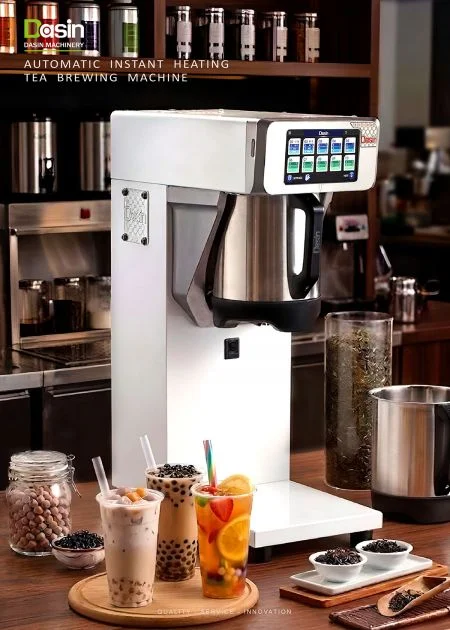
ST300 Automatic Instant Heating Tea Brewing Machine Wi-Fi
ST300 Wi-Fi
It is designed to make brewing tea efficient with a smart tablet interface that's easy to use. The design includes a vortex-style mixing system, which...
Details Add to List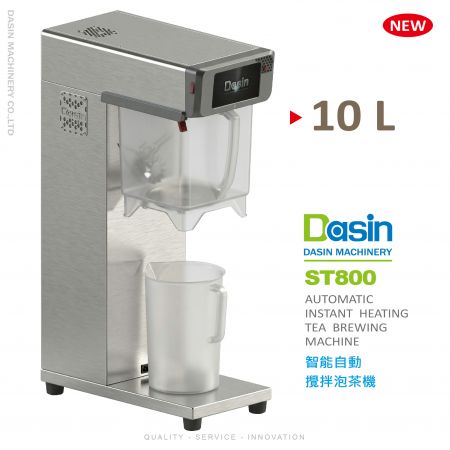
ST800 Automatic Instant Heating Tea Brewing Machine
ST800
It is designed to make brewing tea efficient with a smart tablet interface that's easy to use. The design includes a vortex-style mixing system, which...
Details Add to List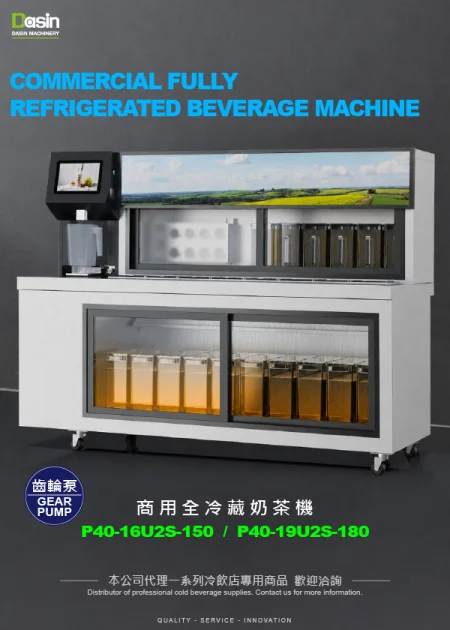
Commercial Fully Refrigerated Beverage Machine
P40-16U2S-150 / P40-19U2S-180
Effortless Operations: Our One-Touch Dispensing system is so intuitive that new staff can master it in seconds. With customizable presets and a precision...
Details Add to List

Popular Products
 Download
5L or 10L Commercial Tea Brewer: How to Choose the Right Capacity for Your Business | Made in Taiwan Commercial Juicers & Shaking Machines for Beverages and Drinks Manufacturer | Dasin Machinery Co., Ltd.
Located in Taiwan since 2010, Dasin Machinery Co., Ltd. has been a food machinery manufacturer. Their main products, including Commercial Juicers, Shaking Machines for Beverages and Drinks, Powder Dispensers, Industrial Juicers and Commercial Tapioca Pearls Machines with ISO 9001 certification.
Dasin Machinery is located in Caotun, Nantou, Taiwan, which is a professional manufacturer of food machinery. Our company was called Shengfa Food Machinery in early times, which started to produce commercial juicers and do OEM since 1975. We continually accumulate our experience in OEM and ODM. Meanwhile we constantly develop new products to fulfill the needs of our customers. Over 40 years of designing and manufacturing experience for commercial juicers, 70% to 80% market share in juice factory and beverage store business of Taiwan.
Dasin has been offering customers high-quality beverage and drink commercial machines, both with advanced technology and 40 years of experience, Dasin ensures each client's demands are met.