
With a Limited Equipment Budget, Which Machines Should You Buy First and Which Can Wait? | Dasin News and Events | Made in Taiwan Commercial Juicers & Shaking Machines for Beverages and Drinks Manufacturer | Dasin Machinery Co., Ltd.
Dasin With a Limited Equipment Budget, Which Machines Should You Buy First and Which Can Wait?. Dasin - Specializes in assisting beverage shops, bubble tea shops, juice shops, restaurants, etc., providing beverage and juice making machine.. Dasin Machinery is located in Caotun, Nantou, Taiwan, which is a professional manufacturer of food machinery. Our company was called Shengfa Food Machinery in early times, which started to produce commercial juicers and do OEM since 1975. We continually accumulate our experience in OEM and ODM. Meanwhile we constantly develop new products to fulfill the needs of our customers.
With a Limited Equipment Budget, Which Machines Should You Buy First and Which Can Wait?
Opening a beverage shop with a limited budget? Learn which commercial beverage equipment should be prioritized, which purchases can be postponed, and how to plan equipment investments based on your menu, workflow, storage requirements, and future business needs.
Planning to open a beverage shop with a limited equipment budget? Which machines should you purchase first?
Some equipment is essential for preparing your main menu items, while other equipment is designed to improve efficiency, reduce repetitive tasks, or support future menu expansion. Without clearly prioritizing your needs, it is easy to spend money on equipment you do not currently need, leaving less budget for essential startup expenses.
In fact, you do not have to purchase every piece of equipment at once. A more practical approach is to confirm your opening menu and preparation workflow first, prioritize essential equipment, and gradually add other equipment according to actual operational needs.
Equipment can be purchased in stages, but essential preparation processes, storage conditions, cleaning requirements, and safety measures must still be confirmed before opening.
Before requesting quotations, divide your planned equipment purchases into three categories. This helps prevent every item from being treated as equally urgent.
This category includes equipment directly related to preparing and serving your main menu items when the shop first opens.
Examples include:
- Preparation equipment required for your main beverages
- Equipment that meets ingredient and material storage requirements
- Essential water supply, cleaning, and related operational facilities
- Equipment required for beverage packaging and serving
The actual requirements depend on your menu. For a tea shop that mainly sells pure tea and milk tea, tea brewing should be a priority. If fresh fruit drinks are a major part of the menu, fruit preparation and appropriate storage requirements should also be included in the plan.
The goal at this stage is not to buy as much equipment as possible. It is to ensure that your main products can be prepared according to the planned workflow from day one.
This category includes equipment that may improve operational efficiency. Whether it needs to be purchased before opening depends on your actual requirements.
Examples include:
- Liquid ingredient portioning equipment
- Equipment that helps reduce repetitive manual tasks
- Processing equipment for specific beverage preparation methods
- Equipment upgrades based on actual serving volume and workflow requirements
If a piece of equipment solves a clearly identified operational problem and will be used frequently from the beginning, it may be worth including in your initial purchasing plan.
On the other hand, if its usage frequency is low or you have not yet confirmed whether it is necessary, you can first evaluate other workable approaches.
Some equipment is mainly intended to support future menu expansion, increased serving volume, standardized operations, or additional store locations.
Examples include:
- Specialized equipment for new beverage products
- Additional production capacity to meet growing business volume
- Equipment that supports multi-store management or standardized operations
- Automation equipment without a clearly defined current use
Before postponing these purchases, confirm whether future expansion will be practical and whether your current space, electrical supply, and plumbing can support your future needs.
When deciding which equipment to prioritize, start by evaluating how directly it affects your main products.
Confirm which beverages you will sell when the shop opens, then determine the equipment required for each preparation process.
If tea-based drinks are your main products, prioritize your tea brewing requirements. If fruit beverages account for a significant portion of your menu, include the relevant fruit preparation processes in your equipment plan.
Avoid purchasing machines without a clear current purpose simply because you might introduce additional menu items in the future.
Ingredient and beverage material storage requirements should be confirmed before opening.
If your menu includes ingredients or materials that require refrigeration, plan suitable refrigeration equipment according to the actual storage conditions rather than discovering after opening that you do not have enough space.
Water supply and cleaning requirements should also be confirmed in advance. A limited budget should not be a reason to overlook essential needs.
If your shop mainly sells takeaway beverages sealed with film, include a sealing machine that is compatible with your cup sizes and sealing requirements in your opening plan.
Before purchasing, confirm the available operating space, equipment specifications, and expected serving volume. This helps prevent situations where equipment has been purchased but does not fit smoothly into the actual workflow.
Not every shop needs the same equipment. However, if a machine can solve a specific operational problem, it is worth evaluating.
For example, if staff repeatedly measure and dispense syrup or other liquid ingredients, consider whether portioning equipment would meet your needs. If tea preparation becomes a bottleneck during peak hours, review your brewing equipment capacity and preparation methods.
The principle is simple: identify the problem first, then choose the equipment. Do not buy a machine first and look for a reason to use it later.
Postponing a purchase is only appropriate if it does not compromise essential preparation processes, storage conditions, cleaning requirements, or safety needs when the shop opens.
➤ If a beverage is only a potential future addition and there is no clear sales plan yet, consider postponing the purchase of specialized equipment.
Decide whether to purchase it once your menu direction and actual requirements become clearer.
➤ Some processing equipment may only be used for a few beverages or during specific periods of the day.
Estimate its usage frequency, operating time, and practical benefits before comparing the cost of purchasing it immediately with the option of adding it later.
➤ Automation equipment may simplify certain tasks, but that does not mean every newly opened shop needs to install every automated solution from the beginning.
If serving volume is still low and workflows have not yet stabilized, first determine whether the equipment can genuinely improve operations before committing the time and money.
➤ If you currently operate only one shop and have not confirmed the timing or scale of future expansion, you can plan for future growth without necessarily purchasing all the additional equipment in advance.
However, if future expansion may be affected by store space, electrical supply, plumbing, or piping, these conditions should still be considered during the initial planning stage.
Do not decide whether equipment is worth buying based on price alone. Use the following four questions to evaluate your options.
➤ If the equipment is necessary to complete an essential preparation process, it should be prioritized. If it only adds convenience, you can evaluate it further.
➤ The more frequently equipment is used, the more important it is to confirm that it is suitable for daily operation, cleaning, and maintenance.
If its intended use is unclear, there is no need to rush into purchasing it.
➤ For example, it may shorten a preparation step, reduce repetitive tasks, or make a particular process easier to standardize. Identify the improvements the equipment can provide before deciding whether the investment is worthwhile.
➤ In addition to the equipment price, confirm any requirements for delivery, installation, setup, consumables, cleaning, and maintenance.
When comparing different options, evaluate the complete purchasing and operating requirements rather than looking only at the quoted price of an individual machine.
Purchasing equipment in stages does not mean buying things only when you suddenly realize you need them. Even if some purchases will be postponed, you should plan the overall workflow and future requirements in advance.
List the main beverages you will offer when opening, identify the equipment required for each preparation step, and determine whether different menu items can share the same equipment.
You do not need to purchase every machine at once, but counter dimensions, operating space, and equipment placement should be planned in advance. This helps prevent future additions from disrupting the existing workflow.
Some machines have specific requirements for electrical supply, water connections, drainage, or installation locations. Even if you plan to purchase them later, understand these requirements early to avoid additional construction work when you expand your equipment setup.
Avoid spending all your available capital on initial equipment purchases. In addition to essential startup expenses, consider daily operating costs after opening and reserve funds for future upgrades when they become necessary.
When your budget is limited, the most important thing is neither to buy the cheapest equipment available nor to purchase every machine at once. Instead, prioritize purchases according to your opening menu, preparation workflow, storage requirements, and serving needs.
Essential equipment should be confirmed first. Equipment that solves specific operational problems should be evaluated according to actual needs. Equipment with no confirmed purpose, or equipment intended mainly for future expansion, can be considered for phased purchasing.
With proper planning, every equipment expense can serve a clear purpose, helping you control your budget while establishing a workflow that suits your shop's actual needs.
When planning equipment for a beverage shop, start by organizing your planned menu, daily serving volume, available store space, and equipment budget. Then evaluate which equipment should be installed first and which purchases can be postponed.
Dasin evaluates commercial beverage equipment in the context of real operational needs, helping businesses assess equipment configurations and develop purchasing plans that better match their operating models.
A: Yes. However, you should first confirm the essential preparation processes, storage conditions, cleaning requirements, and safety needs for opening. Other equipment can be evaluated and purchased in stages according to your menu, usage frequency, and operational requirements.
A: Not necessarily. In addition to price, compare equipment specifications, practical applications, operating methods, cleaning and maintenance requirements, installation conditions, and after-sales service. Make sure the equipment suits your actual business needs.
A: It is advisable to plan the potential equipment locations and essential installation requirements in advance, especially for items that may affect electrical supply, plumbing, counter dimensions, or workflow. Whether you need to reserve the actual physical space depends on your store layout and future expansion plans.
A: Consider whether the absence of the machine would affect the preparation of your main products, how often it will be used each day, what specific problems it can solve, and the total purchasing and operating costs. Use these factors to determine its priority.
Related Reading: "Opening a Beverage Shop for the First Time: Which Equipment Should You Buy First?"
- Related Products
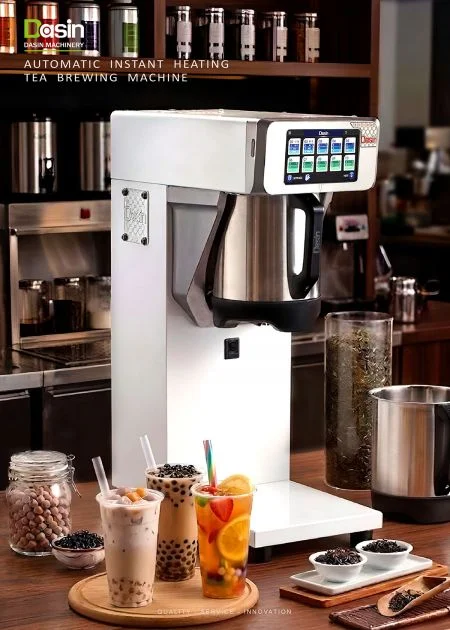
ST300 Automatic Instant Heating Tea Brewing Machine Wi-Fi
ST300 Wi-Fi
It is designed to make brewing tea efficient with a smart tablet interface that's easy to use. The design includes a vortex-style mixing system, which...
Details Add to List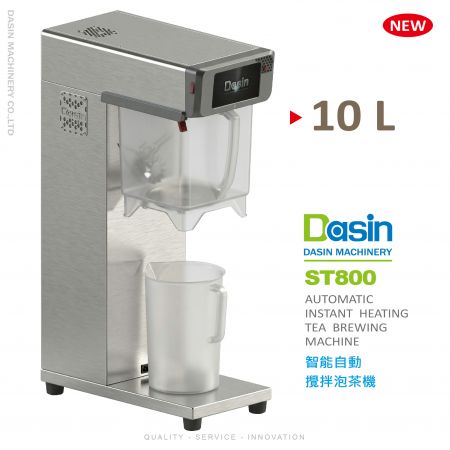
ST800 Automatic Instant Heating Tea Brewing Machine
ST800
It is designed to make brewing tea efficient with a smart tablet interface that's easy to use. The design includes a vortex-style mixing system, which...
Details Add to List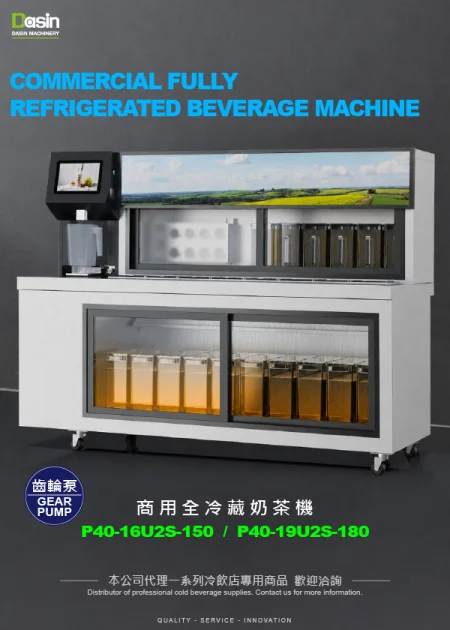
Commercial Fully Refrigerated Beverage Machine
P40-16U2S-150 / P40-19U2S-180
Effortless Operations: Our One-Touch Dispensing system is so intuitive that new staff can master it in seconds. With customizable presets and a precision...
Details Add to List

Popular Products
 Download
With a Limited Equipment Budget, Which Machines Should You Buy First and Which Can Wait? | Made in Taiwan Commercial Juicers & Shaking Machines for Beverages and Drinks Manufacturer | Dasin Machinery Co., Ltd.
Located in Taiwan since 2010, Dasin Machinery Co., Ltd. has been a food machinery manufacturer. Their main products, including Commercial Juicers, Shaking Machines for Beverages and Drinks, Powder Dispensers, Industrial Juicers and Commercial Tapioca Pearls Machines with ISO 9001 certification.
Dasin Machinery is located in Caotun, Nantou, Taiwan, which is a professional manufacturer of food machinery. Our company was called Shengfa Food Machinery in early times, which started to produce commercial juicers and do OEM since 1975. We continually accumulate our experience in OEM and ODM. Meanwhile we constantly develop new products to fulfill the needs of our customers. Over 40 years of designing and manufacturing experience for commercial juicers, 70% to 80% market share in juice factory and beverage store business of Taiwan.
Dasin has been offering customers high-quality beverage and drink commercial machines, both with advanced technology and 40 years of experience, Dasin ensures each client's demands are met.