
How to Evaluate the Cleaning Convenience of a Commercial Sugarcane Juicer Before Purchasing | Dasin News and Events | Made in Taiwan Commercial Juicers & Shaking Machines for Beverages and Drinks Manufacturer | Dasin Machinery Co., Ltd.
Dasin How to Evaluate the Cleaning Convenience of a Commercial Sugarcane Juicer Before Purchasing. Dasin - Specializes in assisting beverage shops, bubble tea shops, juice shops, restaurants, etc., providing beverage and juice making machine.. Dasin Machinery is located in Caotun, Nantou, Taiwan, which is a professional manufacturer of food machinery. Our company was called Shengfa Food Machinery in early times, which started to produce commercial juicers and do OEM since 1975. We continually accumulate our experience in OEM and ODM. Meanwhile we constantly develop new products to fulfill the needs of our customers.
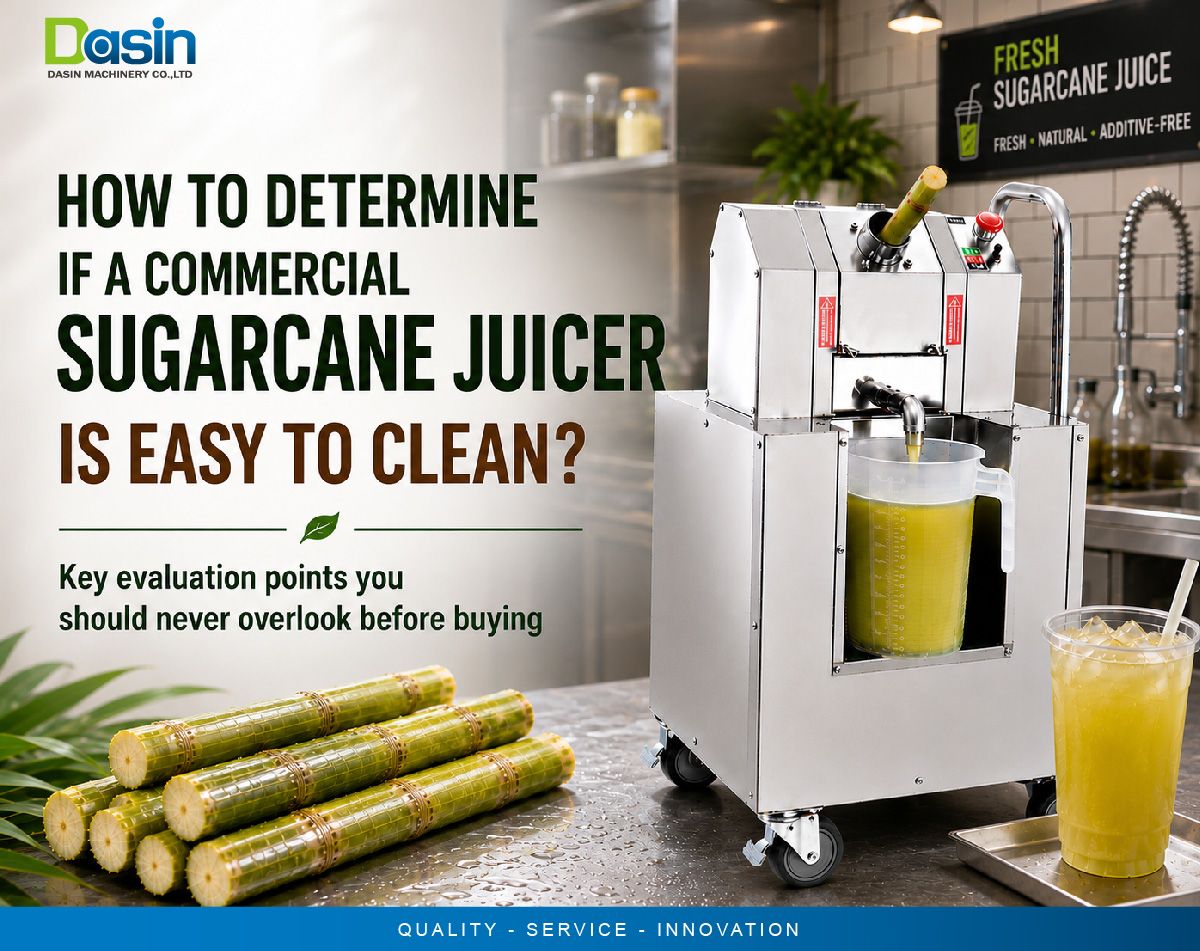
How to Evaluate the Cleaning Convenience of a Commercial Sugarcane Juicer Before Purchasing
DASIN sugarcane squeezer, different from traditional sugarcane juicer with exposed rollers, for sake of health, the machine is designed with protecting cover to prevent dust or insects from contacting with rollers. For safe operation, machine is designed to automatic power off while removing protecting cover.
Stronger 304 stainless steel solid roller with higher durability is adapted to improve juice yield.
How to Evaluate the Cleaning Convenience of a Commercial Sugarcane Juicer Before Purchasing
Cleaning Convenience Is More Than Daily Maintenance—It Is an Important Part of Equipment Selection
When businesses evaluate commercial sugarcane juicers, they often focus on production capacity, machine size, food-contact materials, and overall equipment specifications.
These are all important considerations.
However, after the equipment is installed and daily operation begins, another factor often becomes just as important.
How easy is the machine to clean?
Commercial sugarcane juicers come into direct contact with fresh sugarcane and sugarcane juice throughout the day.
Routine cleaning is therefore a necessary part of daily operation before the equipment is ready for the next production cycle.
For this reason, cleaning convenience affects more than hygiene management.
It also influences workflow efficiency, labor requirements, operating costs, and long-term equipment management.
When selecting commercial equipment, cleaning convenience should be evaluated alongside performance and production capacity.
Why Does Cleaning Convenience Matter?
Every commercial sugarcane juicer requires routine cleaning as part of normal operation.
If the cleaning process is complicated, time-consuming, or difficult to perform around food-contact components, it can increase daily labor requirements and reduce overall operational efficiency.
Over time, these additional tasks become part of the total operating cost of the equipment.
Well-designed commercial equipment should support a cleaning process that is efficient, repeatable, and practical for everyday business operation.
What Cleaning-Related Questions Should You Ask Before Purchasing?
When comparing different commercial sugarcane juicers, consider discussing the following with the equipment supplier:
☛ Which components require daily cleaning?
☛ Are food-contact areas easy to access and clean?
☛ Can components be removed and reassembled easily?
☛ Is it easy to inspect whether cleaning has been completed properly?
☛ Are cleaning instructions or recommended procedures provided?
☛ Can the equipment support a standardized daily cleaning routine?
Different manufacturers may adopt different design philosophies.
Instead of evaluating appearance alone, businesses should consider how the equipment performs during everyday operation.
Different Business Models Have Different Cleaning Requirements
Although many businesses use commercial sugarcane juicers, their cleaning priorities are often different.
● Beverage Shops
Usually prefer equipment that allows routine cleaning to be completed quickly after business hours while minimizing labor time.
● Night Markets, Food Festivals, and Mobile Vendors
Often prioritize equipment that can be cleaned efficiently in changing operating environments and returned to service quickly.
● Tourist Attractions
In addition to routine maintenance, businesses often place greater importance on keeping equipment clean and visually presentable to enhance customer experience.
● Central Kitchens and Food Processing Facilities
Typically focus on standardized cleaning procedures, hygiene management, and maintaining consistent operating practices across multiple production cycles.
Rather than asking which machine is the easiest to clean, businesses should first evaluate whether the equipment supports their own operating procedures and hygiene management system.
Purchasing Tip
Do not ask only whether a commercial sugarcane juicer is "easy to clean."
Also consider:
☛ Which components require routine cleaning?
☛ How much time does daily cleaning require?
☛ Can standardized cleaning procedures be established easily?
The best commercial equipment is not simply equipment that can be cleaned—it is equipment that allows cleaning to become a natural part of everyday operation.
Dasin Insight
Through years of working with beverage brands, food manufacturers, distributors, and international partners, Dasin has observed that many businesses initially focus on production capacity and equipment performance.
However, once equipment enters daily operation, cleaning convenience often becomes one of the most frequently discussed topics.
For this reason, when planning commercial sugarcane juicer solutions, Dasin not only introduces equipment features but also helps customers understand cleaning procedures and evaluate whether the equipment fits their existing operational management system.
We believe that equipment designed for efficient cleaning not only supports better hygiene management but also reduces long-term operating costs while improving overall business efficiency.
Note: The observations above are based on Dasin's practical experience through customer consultations, commercial equipment planning, exhibitions, and international business discussions. They represent first-hand industry experience rather than statistical market research.
Global Market Insight
Across the food service and food processing industries, businesses are placing increasing emphasis on standardized cleaning procedures and hygiene management.
When purchasing commercial food equipment, companies now evaluate cleaning convenience alongside production performance, food safety, and operational efficiency.
This shift reflects a broader industry trend in which commercial equipment is viewed not only as production machinery but also as an essential component of long-term operational management.
Frequently Asked Questions
● Does equipment that is easier to clean automatically make it a better commercial choice?
Not necessarily.
Cleaning convenience is one important purchasing consideration, but it should be evaluated together with business requirements, food-contact materials, equipment design, and overall workflow.
● Should businesses understand the cleaning procedure before purchasing equipment?
Yes.
Understanding routine cleaning requirements helps determine whether the equipment fits existing staffing levels, operational procedures, and management practices.
● Is there one cleaning design that is better than all others?
Not necessarily.
Different manufacturers may adopt different engineering approaches.
The most suitable design is the one that best supports your daily operation and hygiene management requirements.
Purchasing Checklist
Before comparing different commercial sugarcane juicers, confirm the following:
✔ Identify which components require routine daily cleaning.
✔ Verify that food-contact areas are accessible and easy to clean.
✔ Understand how components are removed and reassembled.
✔ Confirm that standardized cleaning procedures can be established.
✔ Evaluate whether the equipment supports your staffing, workflow, and operational requirements.
Completing these evaluations before selecting equipment helps establish more consistent purchasing criteria and supports better long-term investment decisions.
Continue Reading
After evaluating cleaning convenience, the next purchasing consideration is operational safety.
Commercial sugarcane juicers are designed for continuous daily operation, making safety features an important part of both equipment selection and long-term business management.
- Related Products
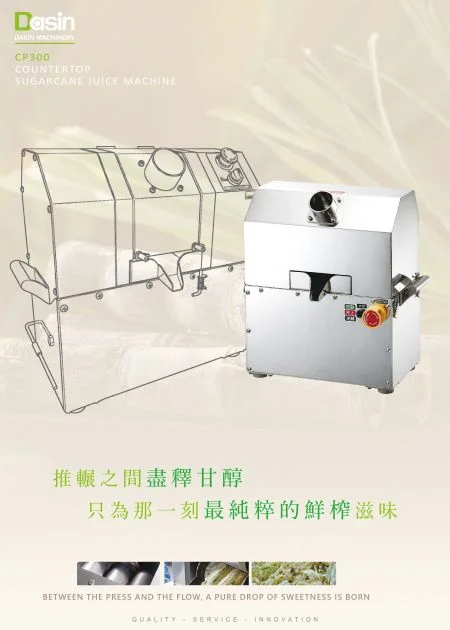
CP300 Countertop Sugarcane Juice Machine
CP300
DASIN desktop sugarcane squeezer, different from traditional sugarcane juicer with exposed rollers, for sake of health, the machine is designed with protecting...
Details Add to List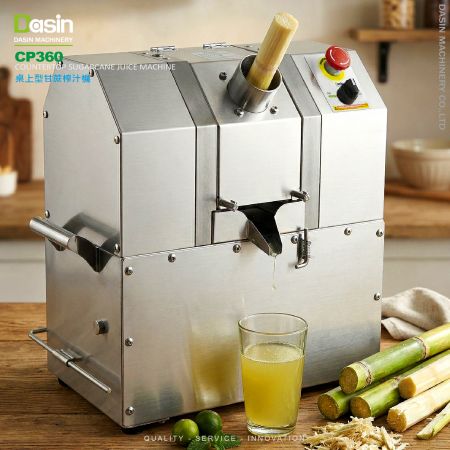
CP360 Countertop Sugarcane Juice Machine
CP360
DASIN desktop sugarcane squeezer, different from traditional sugarcane juicer with exposed rollers, for sake of health, the machine is designed with protecting...
Details Add to List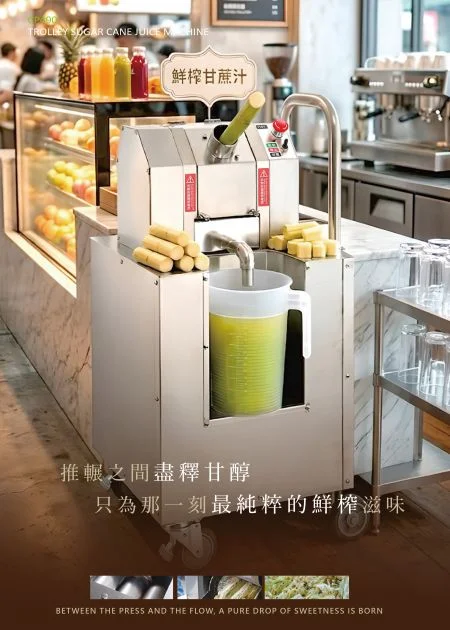
CP490 Trolley Sugar cane Juice Machine
CP490
DASIN trolley sugarcane squeezer, easy to move around, different from traditional sugarcane juicer with exposed rollers, for sake of health, the machine...
Details Add to List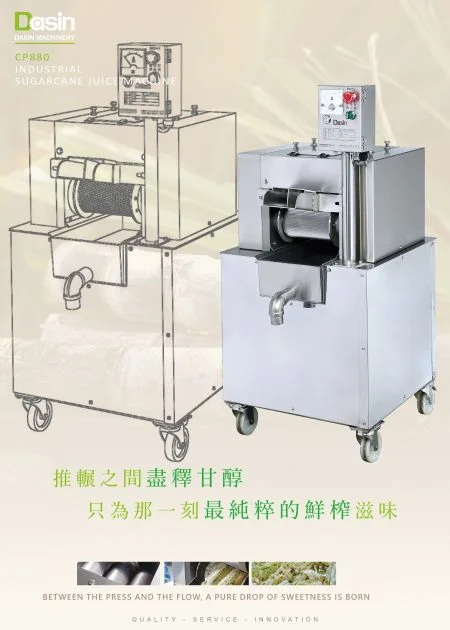
CP880 Industrial Sugarcane Juice Machine
CP880
DASIN Sugarcane Squeezer for Factory Use, six stainless steel rollers for three times of continuous squeezing for best juice yield, different from traditional...
Details Add to List
Popular Products
 Download
 How to Evaluate the Cleaning Convenience of a Commercial Sugarcane Juicer Before Purchasing | Made in Taiwan Commercial Juicers & Shaking Machines for Beverages and Drinks Manufacturer | Dasin Machinery Co., Ltd.
Located in Taiwan since 2010, Dasin Machinery Co., Ltd. has been a food machinery manufacturer. Their main products, including Commercial Juicers, Shaking Machines for Beverages and Drinks, Powder Dispensers, Industrial Juicers and Commercial Tapioca Pearls Machines with ISO 9001 certification.
Dasin Machinery is located in Caotun, Nantou, Taiwan, which is a professional manufacturer of food machinery. Our company was called Shengfa Food Machinery in early times, which started to produce commercial juicers and do OEM since 1975. We continually accumulate our experience in OEM and ODM. Meanwhile we constantly develop new products to fulfill the needs of our customers. Over 40 years of designing and manufacturing experience for commercial juicers, 70% to 80% market share in juice factory and beverage store business of Taiwan.
Dasin has been offering customers high-quality beverage and drink commercial machines, both with advanced technology and 40 years of experience, Dasin ensures each client's demands are met.